
Members In Action

The Reef Resilience Network trains, mentors, and prepares reef champions to sustainably manage coral reefs by combining the latest science with insights from local knowledge. With technical training and planning guidance from the Network, local governments and communities, scientists, NGOs, and the private sector are better equipped to protect and restore critical reef sites around the world. With more than 42,000 managers and practitioners trained in 87% of the 103 countries and territories with coral reefs, there are many stories to tell. Here are a few examples where support from the Network helped managers take action to protect and restore coral reefs.
-
 PLAY VIDEOUlli KloiberApplying Resilience Monitoring in Zanzibar
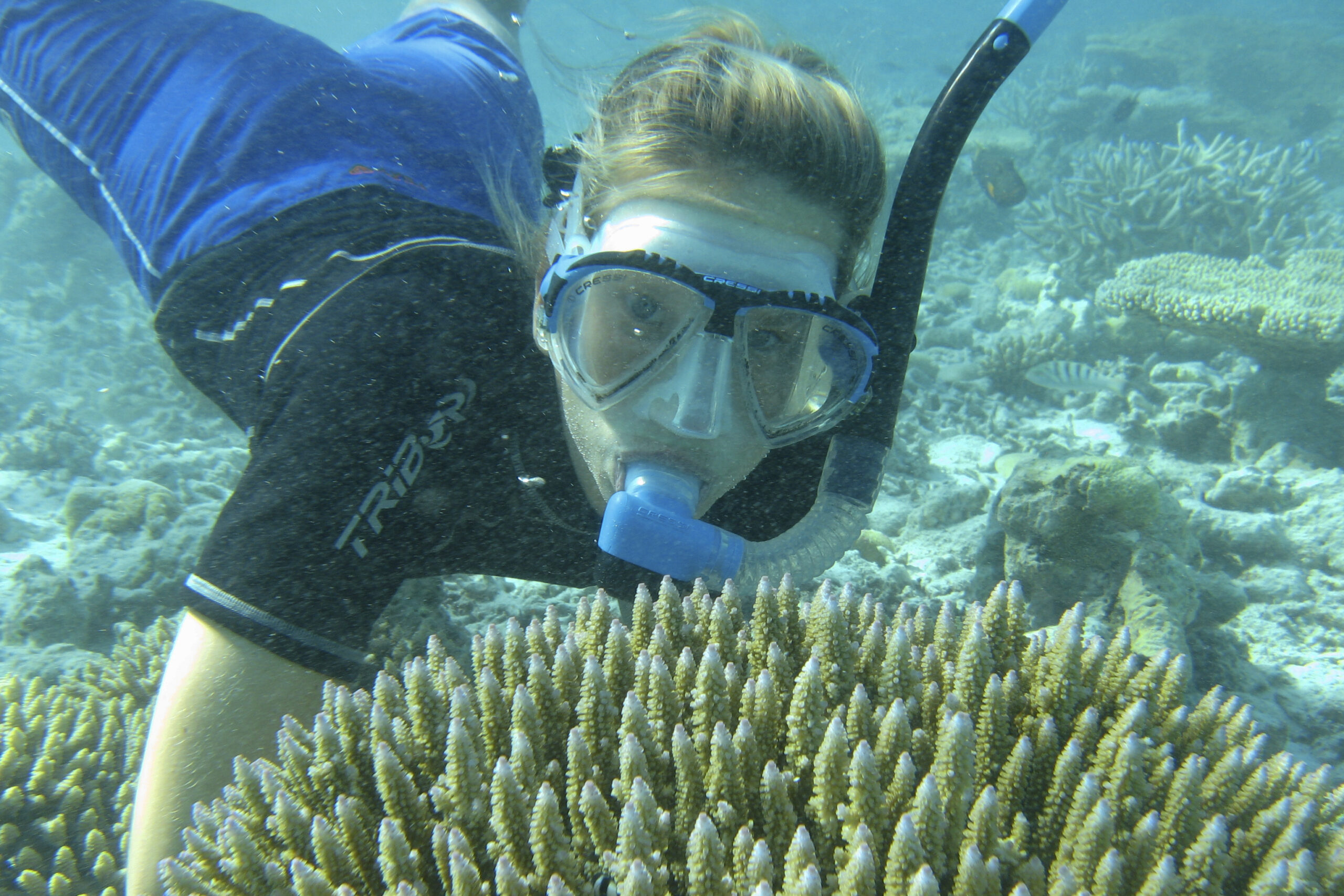
Ulli Kloiber has spent over a decade protecting Chumbe Island Coral Park (CHICOP), a unique marine conservation project off the coast of Zanzibar. Established more than 30 years ago, CHICOP is the world’s first privately established and managed marine protected area. It features a 55-hectare no-take zone and blends conservation with terrestrial protection, sustainable eco-tourism, environmental education, and community involvement.
Shortly after becoming CHICOP’s Conservation and Education Manager in 2012, Ulli recognized the need to connect with other marine managers to exchange knowledge and management tools and discuss challenges. She was “attracted to the abundance of resources offered by the Network” and enrolled in the online mentored course in 2013 and later the five-day Western Indian Ocean Train the Trainers Workshop in Tanzania. “These trainings allowed me to connect with like-minded reef managers and begin to build my professional network, many of whom I still keep in touch with today to share ideas and resources.”
Building on what she learned during the trainings, in collaboration with the Network, Ulli organized a three-day stakeholder workshop in Zanzibar which offered a valuable opportunity for local coral reef managers, scientists, and dive operators to deepen their understanding of coral bleaching and reef resilience and apply resilience monitoring to support effective long-term coral reef management.
Ulli also co-hosted a TNC webinar spotlighting CHICOP’s innovative conservation model and helped establish the area’s first citizen science online reporting tool, alongside a team of regional experts, to document mass coral bleaching events in real time. This tool formed the foundation to aid non-specialists beyond Tanzania in the basic reporting of coral bleaching observations. The simplified webform is still in use today and accessible via CORDIO East Africa’s Indian Ocean Coral Bleaching Reporting Form.
Despite ongoing environmental challenges, Ulli, now a senior scientific advisor for CHICOP, remains optimistic about the region’s resilience and future, and expressed the need for CHICOP to continue collaborating with the Network. “The Network’s commitment and passion for protecting the ecosystem, as well as its strategy to work with local managers, makes such a difference.”
-
 PLAY VIDEOSteven JohnsonBuilding Community and Reef Resilience in the CNMI
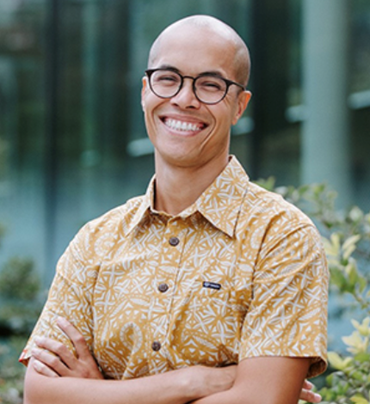
Steven Johnson had just begun his role as a marine biologist with the Division of Environmental Quality in the Commonwealth of the Northern Mariana Islands (CNMI) when he attended the Network’s Pacific Islands Training of Trainers workshop in Palau in 2011. To help Steven apply what he learned, the Network awarded him a grant to lead a training in Saipan for 59 community members in partnership with a NOAA Fisheries Biologist. Their training introduced participants to the key concepts of climate change, coral bleaching, and resilience and trained them on how to conduct coral reef monitoring surveys. The training resulted in an increase in public participation in bleaching monitoring programs in Saipan.
Steven continued to apply what he learned at the training in Palau to his work back home. “In the CNMI, we incorporated the reef resilience principles I learned in Palau to help inform a territory-wide reef resilience assessment. With additional mentorship coordinated by the Network, this work helped us prioritize reefs for management activities through watershed management plans," said Steven. He has since moved on from his marine resource management role and is now an assistant professor in the Department of Natural Resources and the Environment at Cornell University. “As an educator, the Network has been a treasure trove of case studies, guidance materials, and best management practices for me and my students to learn from,” Steven said. He continues to keep in touch with Network members he has met along the way and enjoys connecting his students with them and the Network’s online resources, helping to prepare future generations of marine managers.
-
 PLAY VIDEORita SellaresConserving and Restoring Corals in the Dominican Republic and Wider Caribbean
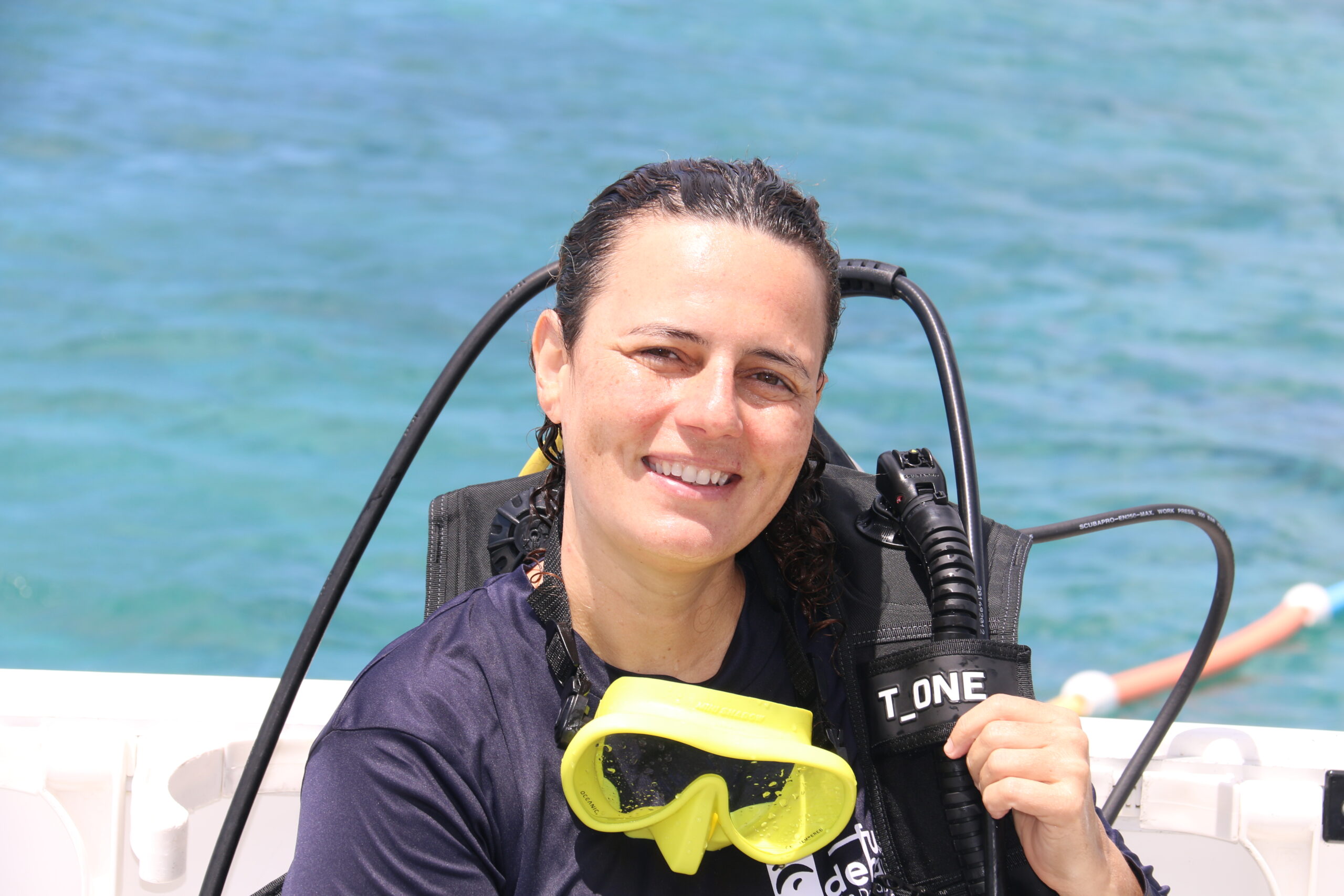
Rita Sellares has served as Executive Director of the Dominican Foundation for Marine Studies (FUNDEMAR) since 2015. Based in the Dominican Republic, she has helped position the country as a regional leader in marine conservation and restoration. Her involvement with the Network formally began with her participation in the Reef Resilience Training in Puerto Rico. “The 2015 training gave me essential tools for managing marine protected areas, but more importantly, it taught me that understanding fish behavior is critical for effective conservation planning. Since then, I’ve relied on Network resources extensively,” she shared.
This training laid the foundation for her long-standing involvement with the Network and her conservation community that grew from it—one she continues to engage with by sharing lessons learned and exchanging critical conservation management insights and resources. Rita credits the Network as a key influence on her knowledge and impact in the Dominican Republic, explaining that “continuous learning and collaboration through the Network transformed how we manage marine areas locally.”
More recently, Rita has stepped into an expert role with the Network, contributing her knowledge at the CoralCarib Restoration Action Plan Workshop, where she trained regional partners and helped shape restoration strategies and planning. She also served as an expert reviewer for the Network’s Coral Reef Restoration Online Course. “The Network is like a living library—full of people, knowledge, and solutions,” she reflected, “but it’s the human connections built through the Network that truly make the greatest impact.”