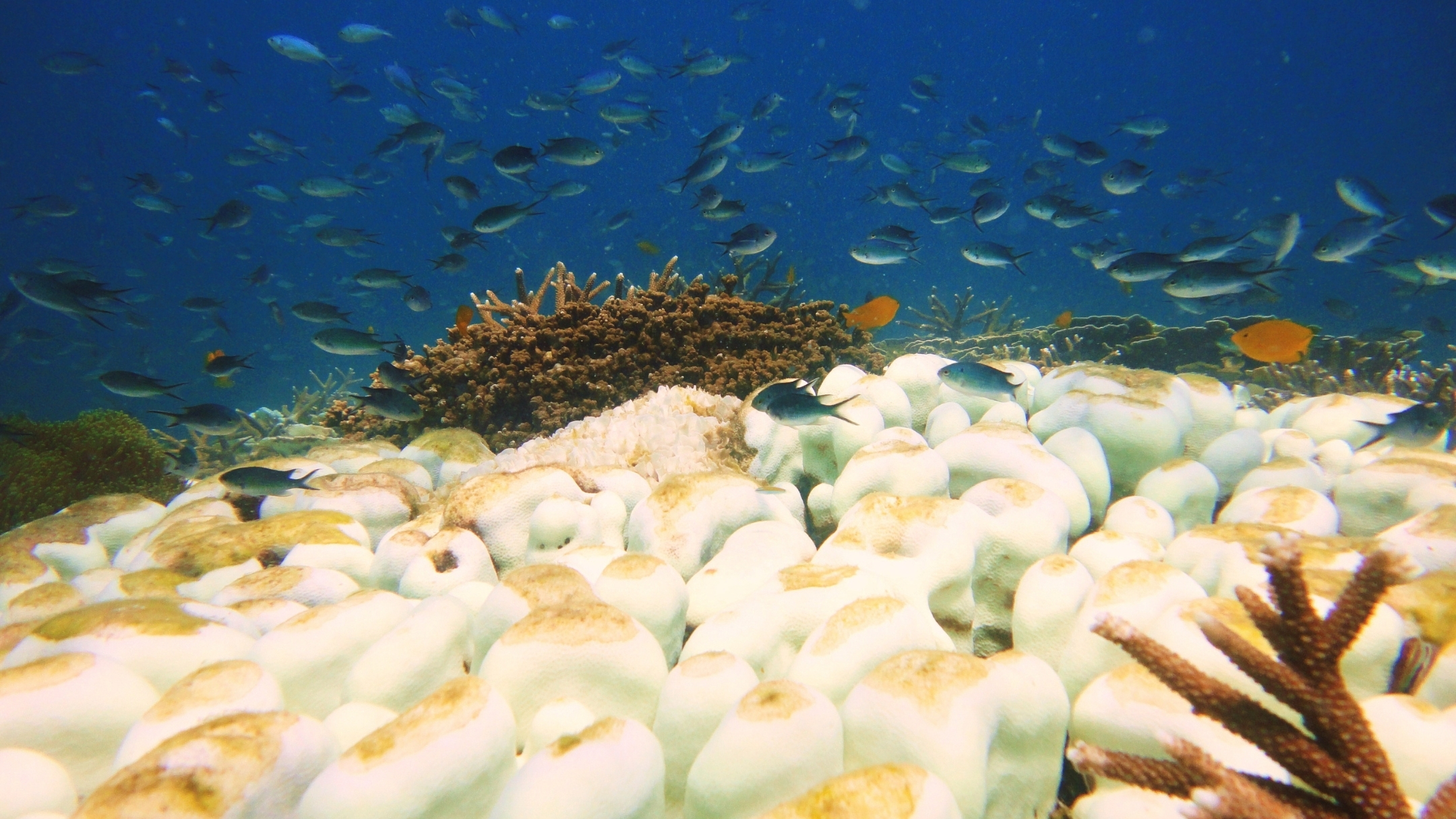
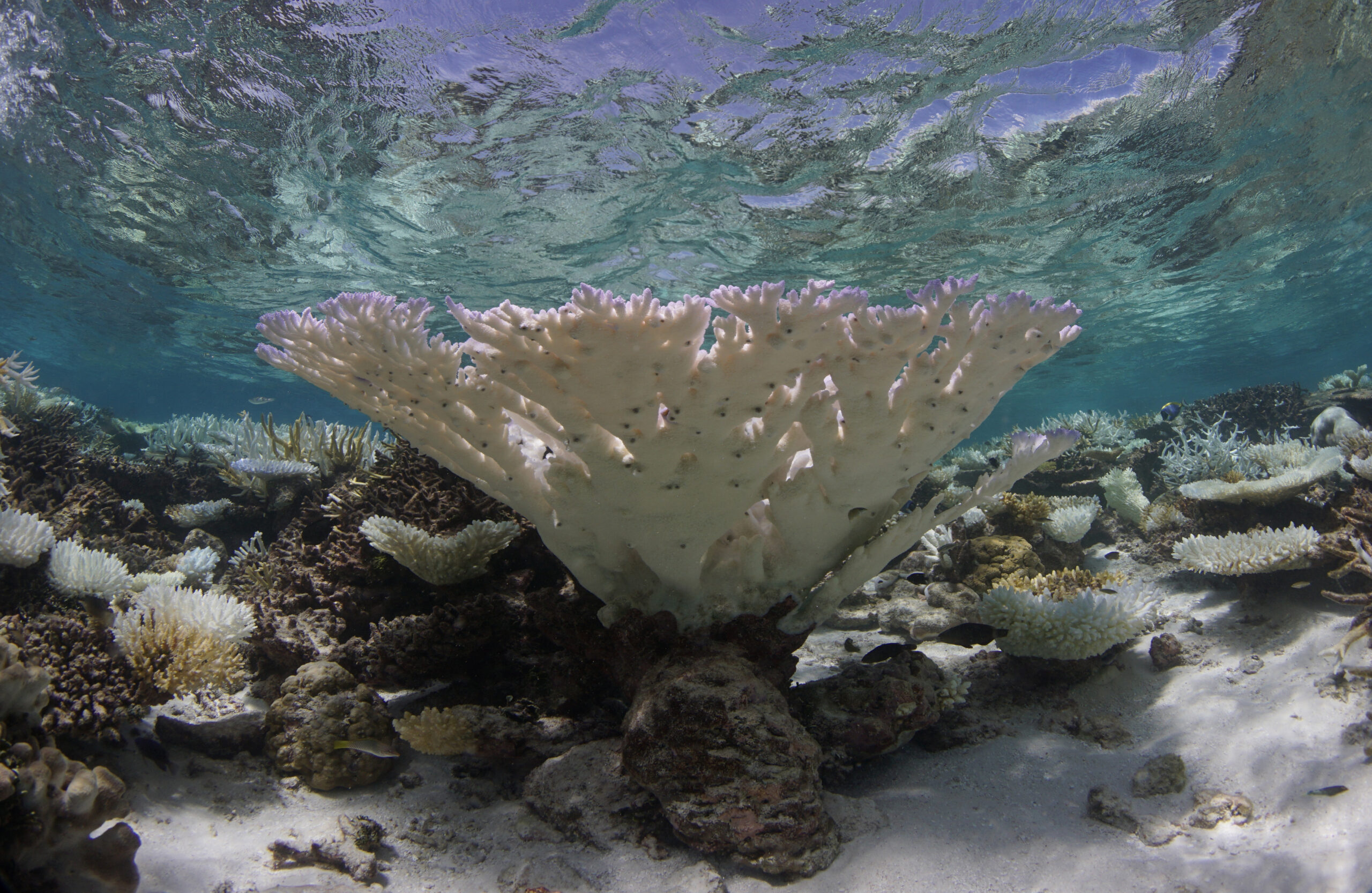
This study analyzed more than 2,500 coral reefs with a Bayesian hierarchical model linking fish biomass to 18 environmental and socioeconomic drivers, identifying 15 bright spots and 35 dark spots.
- Bright spots were characterized by strong sociocultural institutions, high local engagement in management, high dependence on marine resources, and favorable environmental conditions.
- Dark spots were associated with high levels of fish capture, use of storage technology, and recent environmental shocks.
- Results suggest bright spots can inform conservation beyond remote pristine areas and help focus management on socioeconomic drivers for long-term reef resilience, while dark spots highlight strategies to avoid.
Author: Cinner, J.E., C. Huchery, M.A. MacNeil, N.A.J. Graham, T.R. McClanahan, J. Maina, E. Maire, J.N. Kittinger, C.C. Hicks, C. Mora, E.H. Allison, S.D. Agata, A. Hoey, D.A. Feary, L. Crowder, I.D. Williams, M. Kulbicki, L. Vigliola, L. Wantiez, G. Edgar, R.D. Stuart-Smith, S.A. Sandin, A.L. Green, M.J. Hardt, M. Beger, A. Friedlander, S.J. Campbell, K.E. Holmes, S.K. Wilson, E. Brokovich, A.J. Brooks, J.J. Cruz-Motta, D.J. Booth, P. Chabanet, C. Gough, M. Tupper, S.C.A. Ferse, U.R. Sumaila, and D. Mouillot
Year: 2016
View Abstract
Email for the full article: resilience@tnc.org
Nature 535: 416-419. doi:10.1038/nature18607