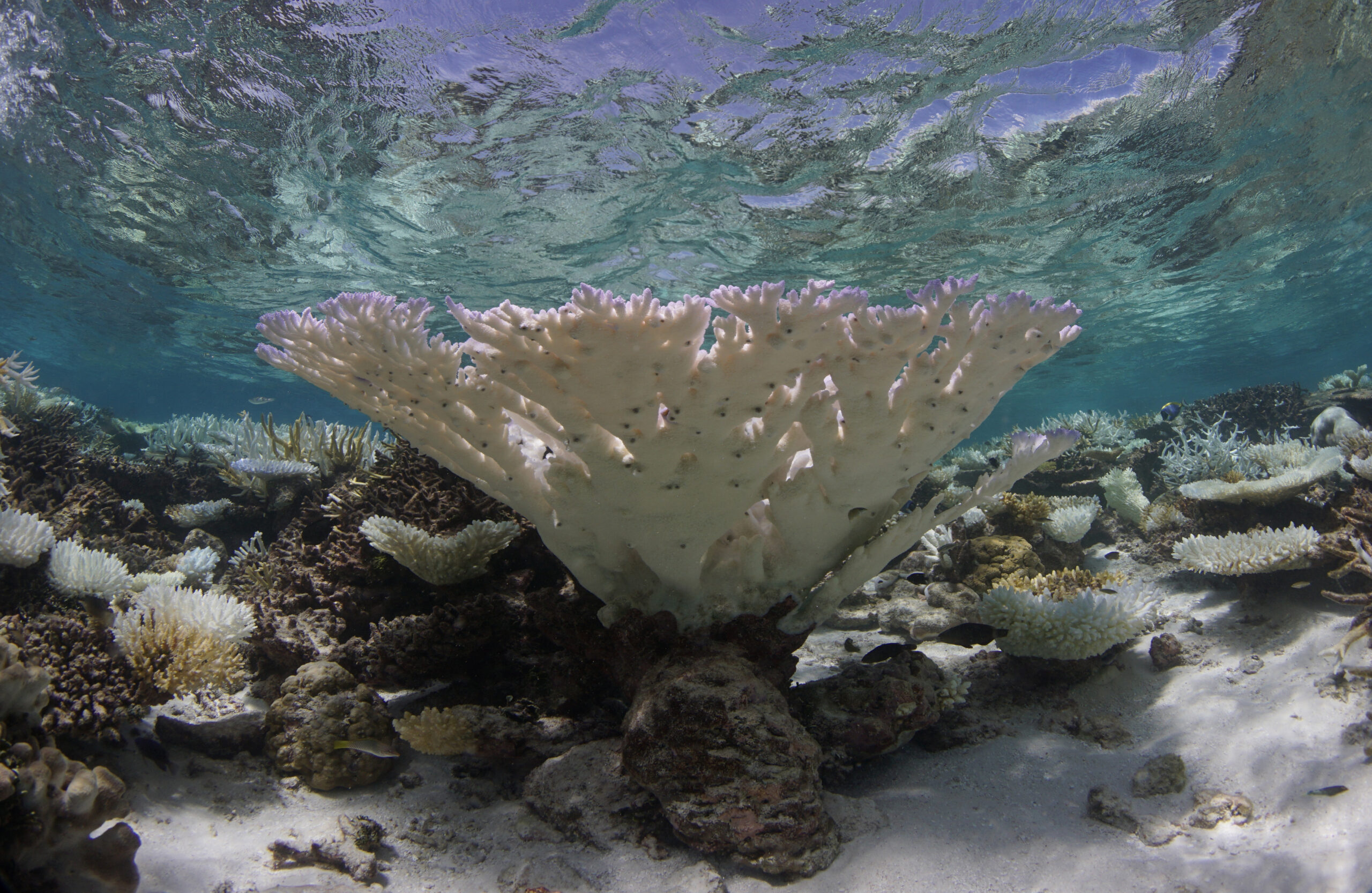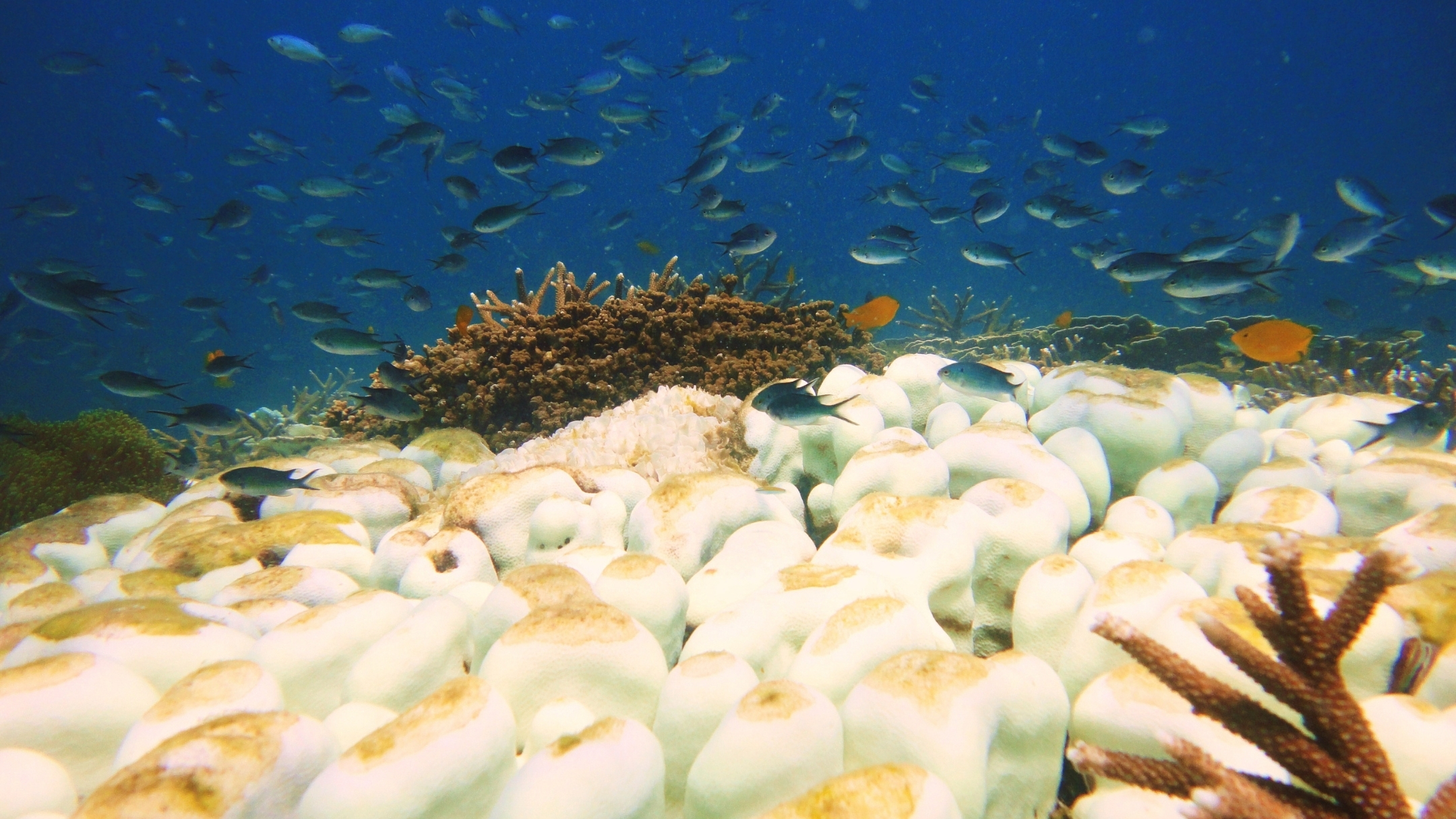
Coral reefs help reduce coastal flooding and erosion from extreme weather events by dissipating wave energy before it reaches shore. Because of this, coral reef restoration is increasingly being considered a hazard mitigation and coastal protection strategy, especially as sea-level rise and climate change worsen coastal threats. Vulnerable populations, including low-income communities, minorities, the elderly, and children, are disproportionately affected by these hazards.
This study presents the first high-resolution, region-specific estimates of the flood protection benefits of hybrid coral reef restoration across 1,005 kilometers of reef-lined coastline in Florida and Puerto Rico.
Hybrid restoration combines structural and ecological techniques: reef frameworks are built or enhanced using natural or artificial materials, and living corals are planted onto them. This increases reef height and complexity, altering wave dynamics to reduce energy and coastal water levels and lowering flood risks while restoring degraded ecosystems. Restoration is most effective on reefs that are shallow, nearshore, and narrow. Restoring these areas widens the barrier and reduces wave energy, offering the greatest flood protection.
The model found that restoring just 20% of reefs could shrink the 100-year flood zone by 19.7 km², protect nearly 15,000 people, avoid $1 billion in property damage, and prevent $797 million in economic losses. Expected annual benefits vary by location but are highest in low-lying, densely populated regions, such as coastal cities like Miami, Florida, and San Juan, Puerto Rico. These areas have reefs located near large population centers, which tend to be most heavily impacted by human activities such as pollution, fishing, and tourism, making them especially in need of restoration.
To be viable as a hazard mitigation strategy, reef restoration must be cost-effective, meaning the cost to restore must be lower than the expected cost of flood damage it prevents. The study uses a conservative estimate of $3 million per kilometer (2023 USD) for hybrid reef restoration. Based on this, 3% (35 km) of reefs would yield a benefit-cost ratio greater than 1 within one year, and 20% (206 km) of reefs would be cost-effective over a 30-year period.
Implications for managers
- Use hybrid restoration methods that combine structural elements with coral planting to enhance wave protection and maximize flood reduction benefits.
- Prioritize shallow, narrow reefs near shore, especially those fronting low-lying, densely populated, or vulnerable communities, where restoration offers the greatest flood protection.
- Use socioeconomic data and benefit-cost analyses to identify high-impact and cost-effective restoration sites.
- Frame coral restoration as a climate adaptation strategy and use benefit-cost analysis to secure funding for reef restoration from hazard mitigation, disaster recovery, and insurance programs.
Author: Storlazzi, C.D., B.G. Reguero, K.C. Alkins, J.B. Shope, C. Gaido-Lassarre, T.S. Viehmam, and M.W. Beck
Year: 2025
Sci Adv 11: eadn4004. doi: 10.1126/sciadv.adn4004