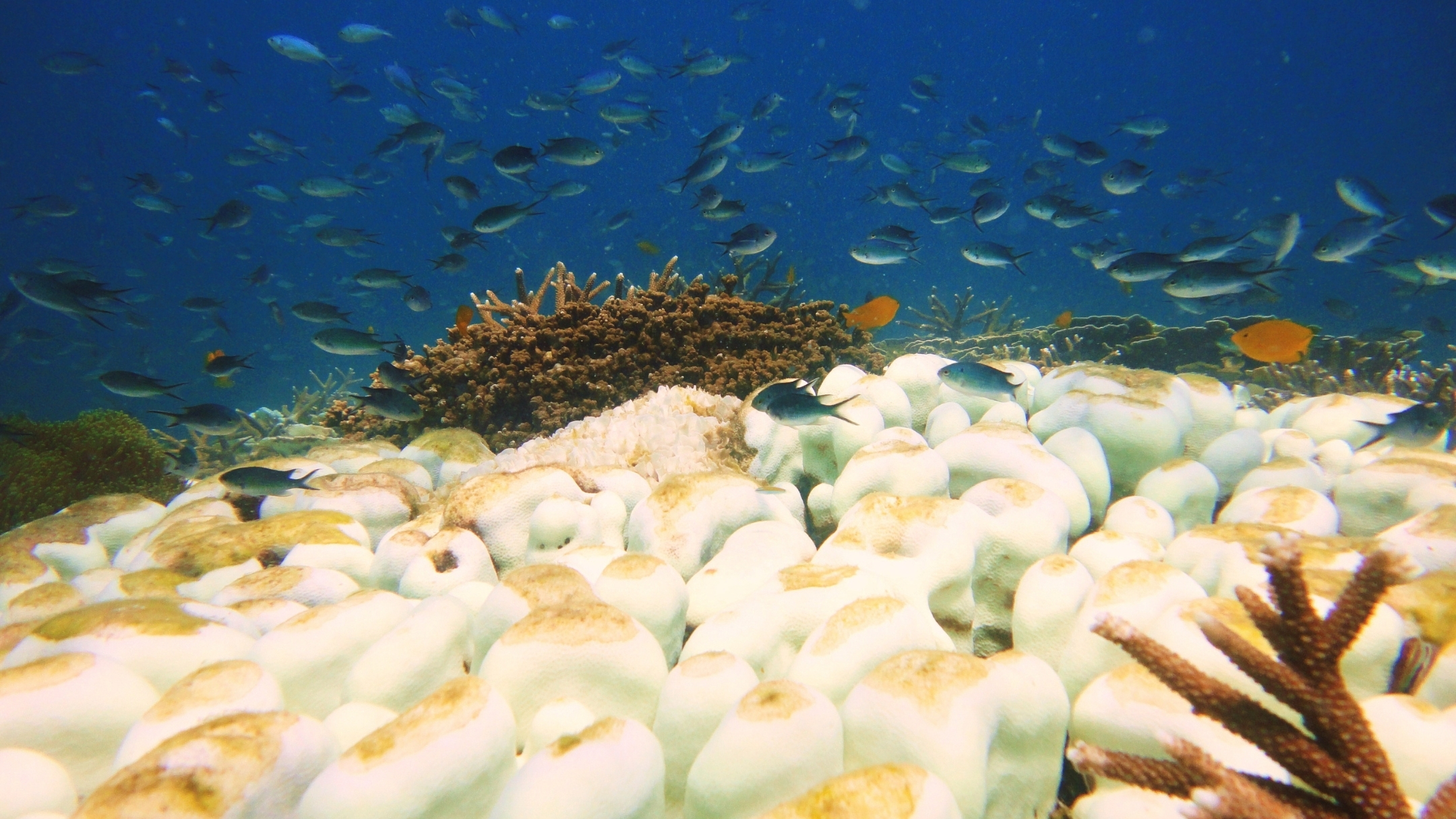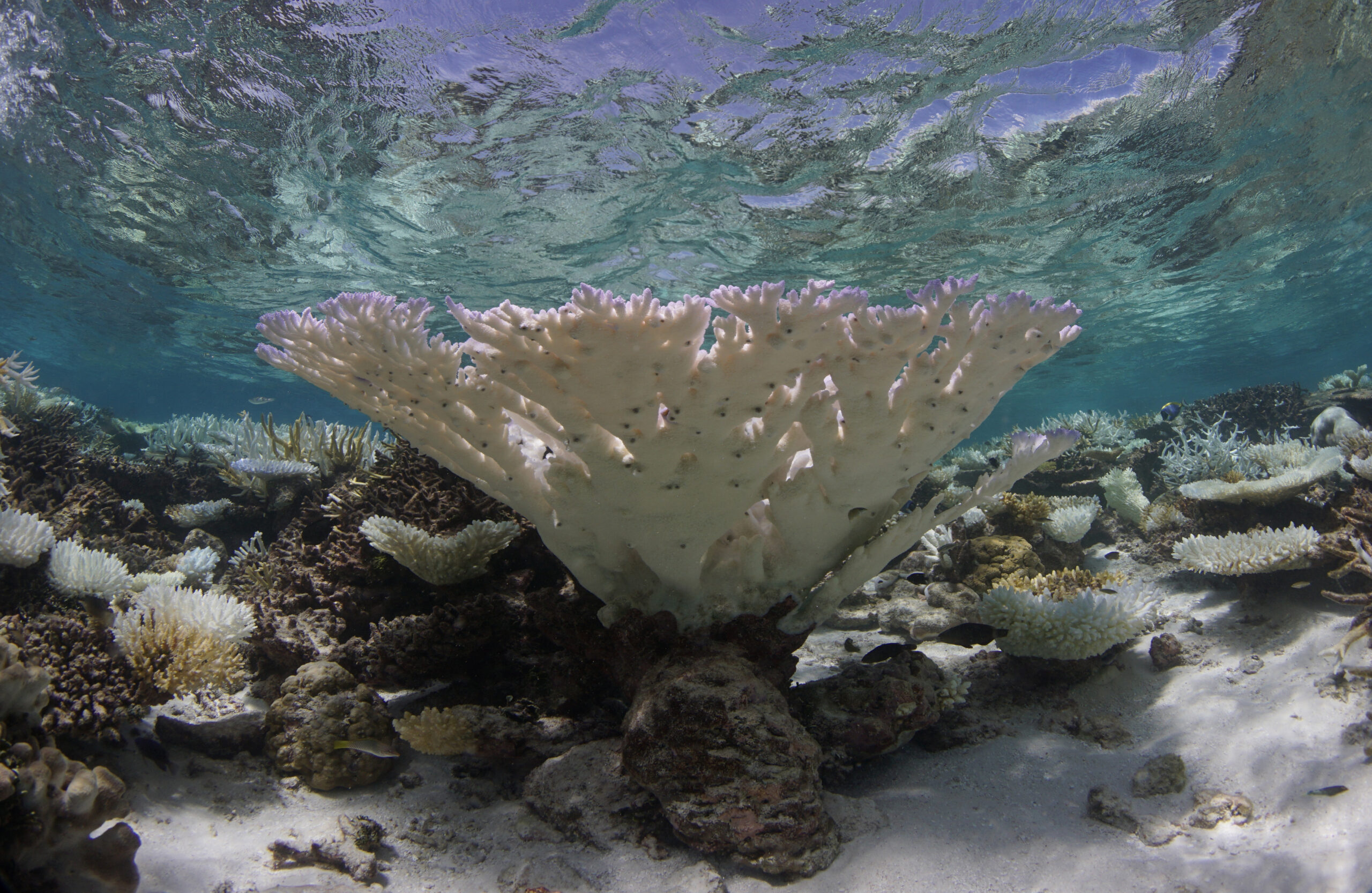
Caribbean coral reefs are in decline due to multiple stressors, including climate change, disease, and the overgrowth of macroalgae. Healthy populations of herbivores are critical to reef recovery because they help keep algae in check, allowing corals to thrive. Coral restoration efforts often fail when herbivores are absent or depleted. This review examines the potential of mariculture—the farming of marine species—and restocking for three key herbivore groups in the Caribbean: fishes, urchins, and crabs.
Fishes
Fish, especially parrotfishes and surgeonfishes, have become the dominant grazers on Caribbean reefs since the catastrophic 1980s die-off of the Long-spined sea urchin Diadema antillarum due to disease. Managing reef fish populations through mariculture, however, has been limited by their complex life cycle. Collecting and raising young fish (postlarvae) to boost herbivore numbers shows some potential as a future solution, but is still in its infancy. Marine protected areas (MPAs) and bans on fishing herbivorous fish remain key management solutions to increase fish biomass, grazing rates, and coral recruitment.
Urchins
Diadema antillarum is a powerful grazer but has suffered mass die-offs in the Caribbean, as recently as 2022. Other urchins like Echinometra viridis also graze algae, though they require high densities to be effective and can cause damage through bioerosion. Urchin mariculture is promising: Diadema can be bred in captivity, produce a large number of eggs, and spawning can be reliably induced. However, larval rearing is difficult due to their sensitivity to water quality and nutritional needs. Successful retention of restocked urchins on reefs has also been problematic and depends on factors such as shelter availability and predation pressure. Alternative approaches like Assisted Natural Recovery—which involves adding settlement structures (e.g., plastic bio balls) to reefs—have increased recruitment, though predation may still limit juvenile and adult survival. To effectively reduce macroalgae, urchins must be stocked at high densities because their foraging movements are limited. Larger, more complex reefs are generally more successful at retaining urchins than small patch reefs (<8 m²). Collecting postlarvae from the wild, which can then be head started in the lab and released as juveniles, may offer a practical alternative to lab-based rearing.
Crabs
Herbivorous crabs, especially Maguimithrax spinosissimus, have recently been recognized as another effective controller of algae. These crabs consume macroalgae that fish and urchins often avoid, are more motile than urchins, and have higher grazing rates per gram than most parrotfish. However, their overall effectiveness is limited by their low natural densities. In Florida experiments, stocking crabs significantly reduced macroalgal cover and increased coral and fish populations. The crabs are also tolerant of warm, acidic conditions making them potentially valuable in building climate-resilient reefs. They are the easiest grazers to culture in labs, saltwater quarries, or reef-based cages with minimal husbandry. Ideal stocking densities and their effects on other invertebrates are still being studied, but their small home ranges may help ensure their retention on reefs.
Considerations for mariculture
Restoring grazing function on reefs at scale is costly and hard to estimate, yet it can potentially increase the efficacy of coral restoration. NOAA’s “Mission: Iconic Reefs” project estimates a cost of $97 million over 10 years to restore 27 hectares. Of this, grazer enhancement (e.g., Diadema antillarum) is projected to cost $14 million—significantly less than coral restoration, which is estimated at $61 million. Though cheaper, herbivore mariculture must be carefully managed to avoid ecological risks such as overgrazing, predation on corals, genetic anomalies, and altered community dynamics.
Climate change is likely to enhance macro-algal growth and reduce fish size, making the role of invertebrate grazers even more critical. Strategies should combine ecological understanding with climate action, prioritize protection of wild populations, and use adaptive, site-specific approaches. A 25% macroalgae cover threshold is suggested as a target for reef recovery for the Caribbean, though this may vary by region.
Implications for managers
- Continue to prioritize protection of herbivorous fishes. These species remain a cornerstone of reef recovery and should remain a key focus of fisheries management and conservation policies.
- Expand restoration impact using invertebrate grazers. Mariculture and restocking of species like Diadema antillarum and Maguimithrax spinosissimus can complement herbivorous fish by enhancing grazing pressure.
- Ensure functional redundancy in grazer communities. Target species should include a diversity of species to maintain resilience if one species declines.
- Conduct baseline monitoring before grazer stocking. Understanding site-specific characteristics—such as shelter availability, algal cover, and predator presence—is essential for determining whether and how to stock grazers effectively.
- Develop a decision-support framework. Restoration practitioners need tools to estimate which species to stock, in what combinations, and at what densities to maximize reef resilience and cost-efficiency.
- Incorporate climate change into restoration planning. All herbivore restoration and broader conservation strategies must account for current and future climate stressors, which can amplify macroalgal growth and reduce the effectiveness of natural grazing.
Author: Butler, M.J., A. Duran, C.J. Feehan, A.R. Harborne, A. Hylkema, J.T. Patterson, W.C. Sharp, A.J. Spadaro, T. Wijers and S.M. Williams
Year: 2024
Front. Mar. Sci. 11:1329028. doi: 10.3389/fmars.2024.1329028