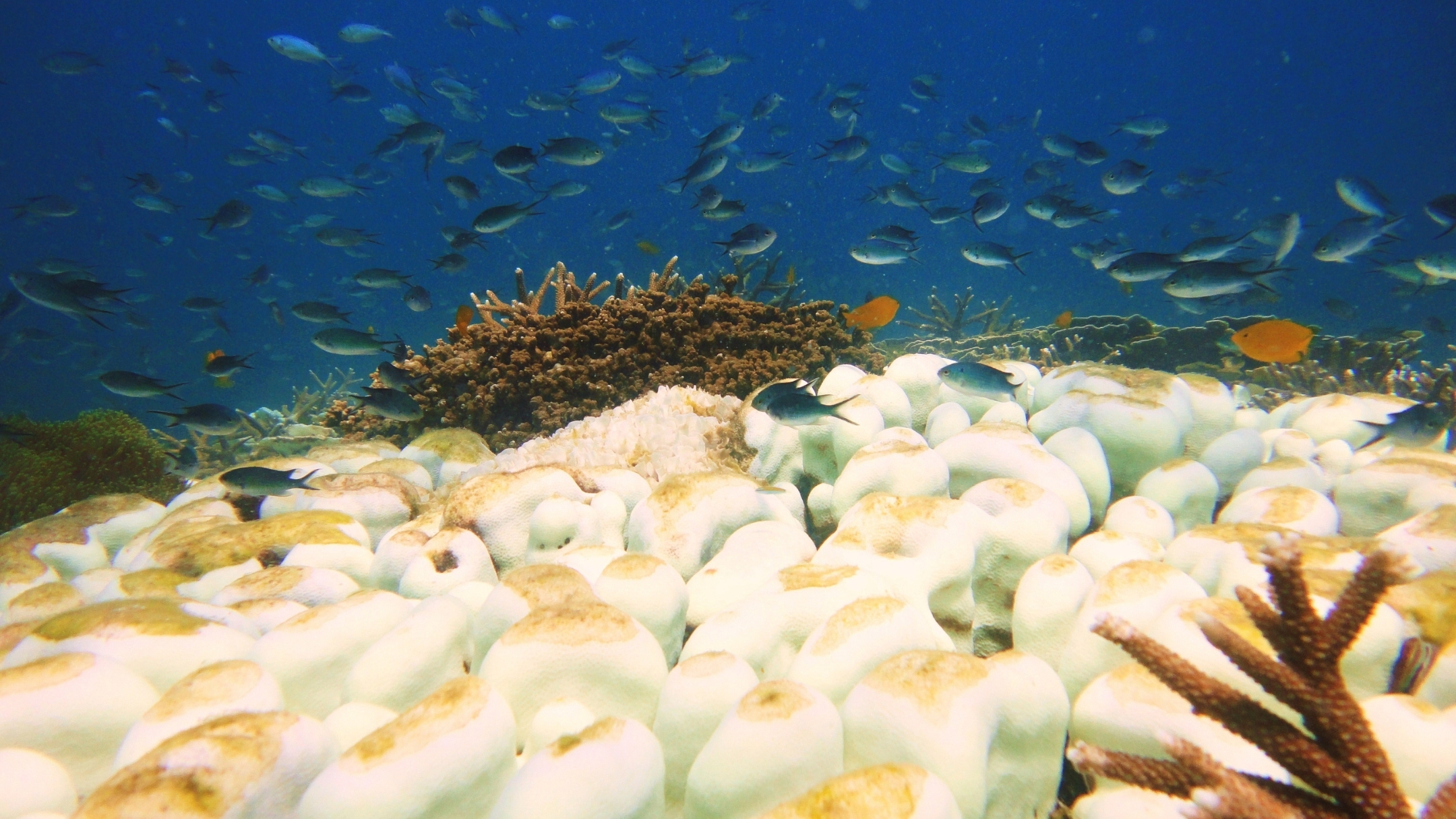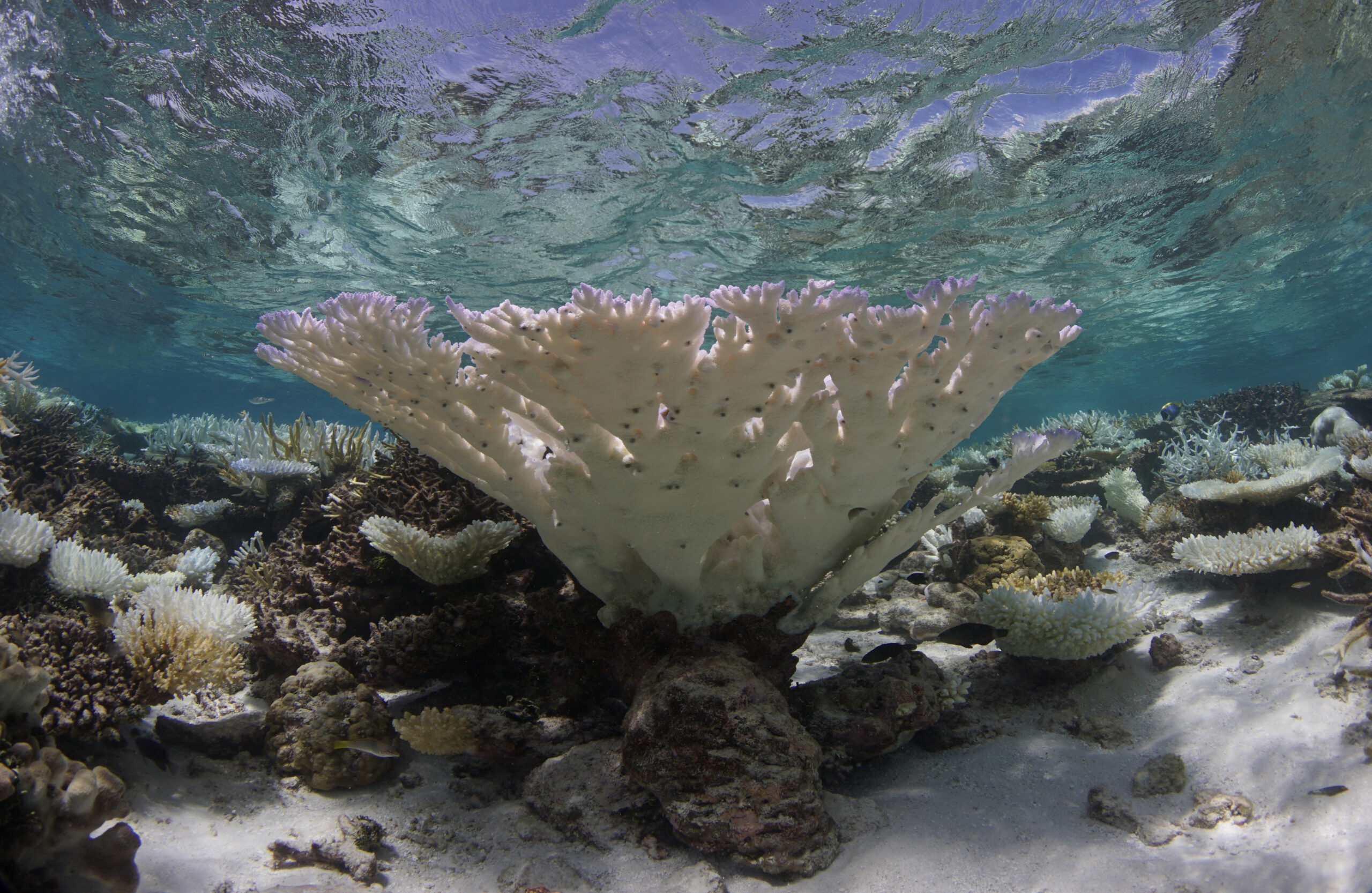
Mass coral bleaching is driven by synoptic-scale warming mechanisms that operate over large spatial scales (>1,000 km) and persist for weeks to months. Unlike localized mechanisms, which can cause bleaching at the scale of individual reefs to small regions, mass bleaching events extend across entire reef systems or geographic regions and are a relatively recent phenomenon linked to global ocean warming. There have been four global-scale coral bleaching events (GCBEs) documented to date: 1998, 2010, 2014-2017, and most recently GCBE4, following widespread marine heatwaves that began in 2023. Heat stress is typically quantified using Degree Heating Weeks (DHW), a metric that combines the magnitude and duration of thermal stress. A threshold of 4°C-weeks has long been used as an indicator of significant bleaching risk, and recent global analyses suggest this threshold is generally conservative for predicting bleaching occurrences at broad spatial scales. Building on this framework, this study examines GCBE4 in the context of previous global bleaching events and long-term warming trends in sea surface temperatures, assessing how recent heat stress patterns compare with historical records and the broader trajectory of ocean warming.
Using NOAA Coral Reef Watch’s satellite-derived sea surface temperature and heat stress data from 1985–2025, the authors developed the Global Coral Heat Stress Index to track and compare bleaching-level heat stress across global coral reefs. The index measured the proportion of reef areas experiencing accumulated heat stress ≥4°C-weeks and identified periods of global-scale heat stress comparable to the 1998 global bleaching event. The authors used the index to examine the geographic extent, duration, and intensity of heat stress globally, as well as across the Atlantic, Indian, and Pacific Oceans and compare GCBE4 with previous global bleaching events. They compiled, compared, and reviewed qualitative and quantitative mass bleaching data from on-the-ground observations by reef managers, literature, media reports, and voluntary NOAA submissions. These observations were combined with satellite-derived heat stress data to evaluate bleaching occurrence across coral reef nations and territories. Finally, they examined long-term sea surface temperature trends and their relationship with ENSO and global bleaching events.
The study found a clear association between GCBEs and strong El Niño phases, although not necessarily a causal relationship. However, rising baseline SSTs mean that strong El Niño events are no longer necessary for global-scale coral heat stress: the nearly four-year period of ENSO-neutral and La Niña conditions from 2019 to 2023 had an average global SST of 23.2 °C, equal to the peak temperature reached during the strong 1997 – 1998 El Niño event. Using the Global Coral Heat Stress Index, four periods of global coral heat stress were identified, with the fourth beginning in August 2018 and continuing for more than seven years as of December 2025. When these persistently elevated baseline temperatures coincided with the strong 2023 – 2024 El Niño, GCBE4 became the most extensive and severe global coral heat stress event on record, with bleaching-level heat stress affecting 77.2% of global reef locations within a 365-day period, nearly four times the extent observed during GCBE1. As global coral heat stress conditions continue to surpass GCBE1 thresholds, we have entered an era of near-annual bleaching risk with associated dire consequences. Global coral bleaching may no longer be understood as a series of discrete events driven primarily by strong El Niño conditions, as persistent and increasingly frequent marine heat stress is becoming an almost continuous threat to reefs worldwide.
Management Implications
- As prolonged warming makes distinct bleaching events harder to distinguish, the Global Coral Heat Stress Index provides a clearer picture of global bleaching risk. It helps identify and compare periods of severe versus moderate stress, offering a better understanding of overall risk.
- Bleaching risk is not limited to strong El Niño events, and ENSO phases alone can no longer be relied upon to anticipate major global-scale bleaching. Elevated baseline ocean temperatures mean that widespread bleaching-level heat stress can now occur during ENSO-neutral or La Niña conditions, highlighting the need for continuous, year-round monitoring and preparedness.
- Repeated heat stress is a major management concern because the increasing frequency and duration of these events leave reefs with insufficient time to recover. Management strategies must account for cumulative impacts rather than focusing solely on individual events, prioritizing actions that reduce local stressors and support reef resilience.
Author: Spady, B., W. J. Skirving, J. L. De La Cour, E. F. Geiger, G. Liu, O. Hoegh-Guldberg, A. Norrie, S. F. Heron, M. W. Pomeroy, G. Kolodziej, K. T. Brown, D. P. Manzello
Year: 2026
Coral Reefs, 1-16. doi: https://doi.org/10.1007/s00338-025-02810-x