Management Effectiveness in Practice at Helen Reef, Palau
Location
Helen Reef, Palau, Micronesia
The challenge
Owned by the Hatohobeian community and located about 300 miles southwest of the main island of Palau, Helen Reef is one of the most remote and biologically diverse coral reefs on Earth. The reef is home to a high number of reef fish, coral species, and fish spawning aggregations. The Hatohobei people have historically relied on the reef’s rich marine resources for cultural, subsistence, and economic needs. However, the remote location of Helen Reef limited effective enforcement of fishing activity, resulting in illegal catch and overexploitation of resources.

Aerial view of Helen Reef Island, Palau. Photo © OneReef
Foreign fishing vessels with crews outnumbering the local community raided the reef, illegally harvesting live reef fish, trochus, sharks, turtles, giant clams, sea cucumbers, and other species to beyond sustainable levels. ref The local community feared a loss of key food resources and cultural identity for future generations.
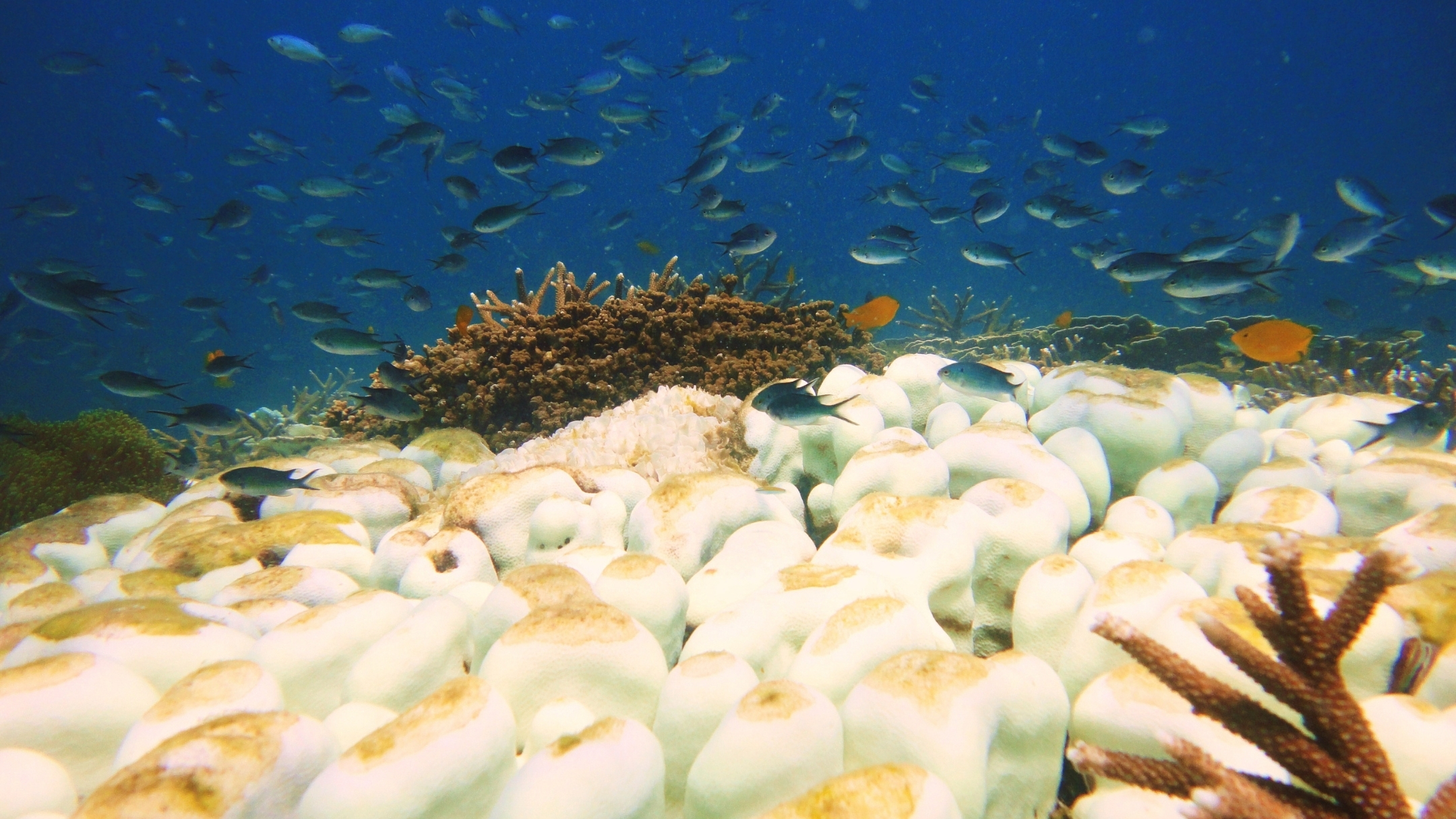
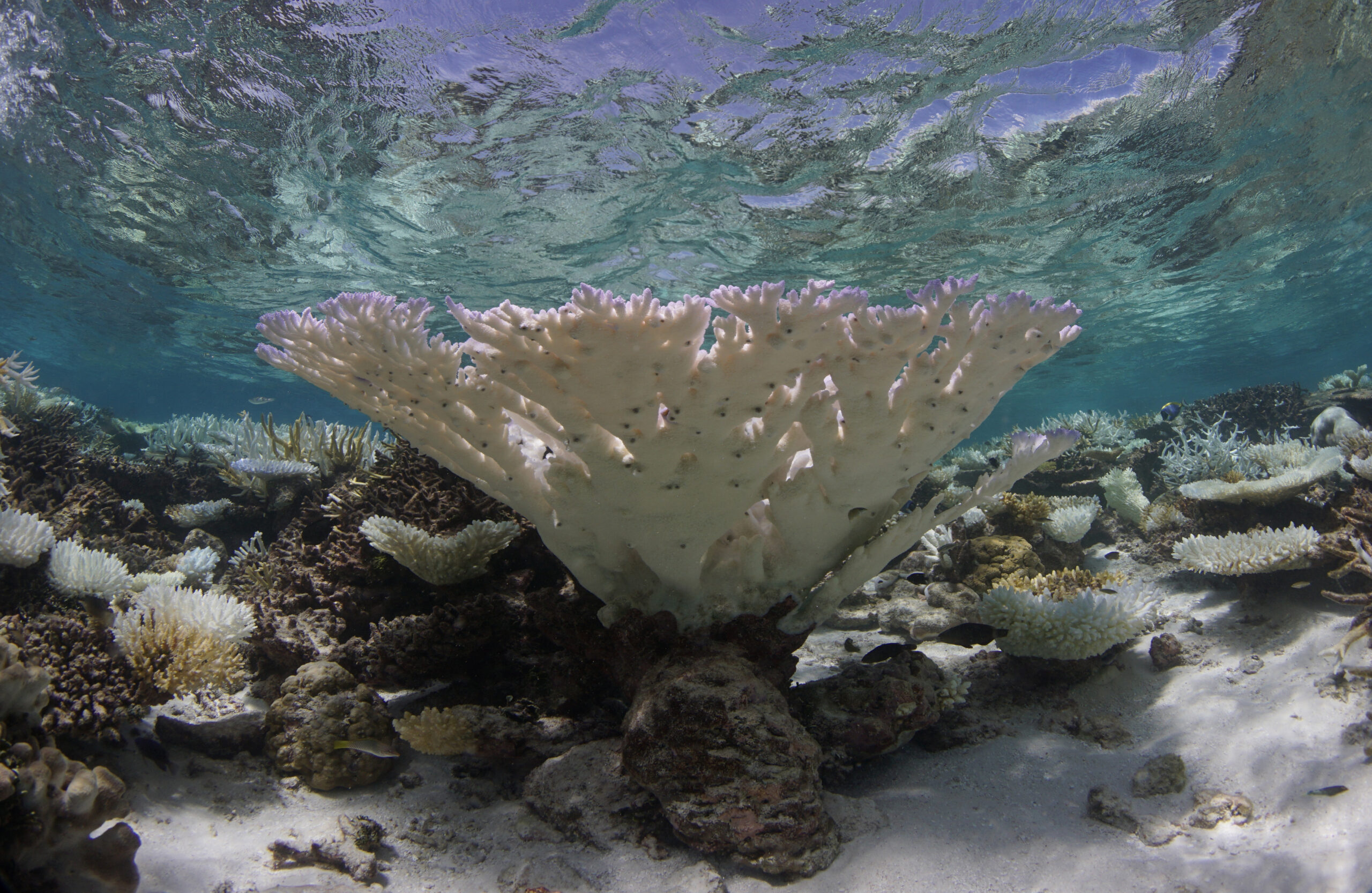
By the late 1990s, key resources and habitats had been over-exploited or harmed to the point where wide-scale damage was evident. Exacerbating these threats, Helen Reef experienced a coral bleaching event in 1998. Coral bleaching severely impacts corals by reducing growth and reproduction, increasing disease susceptibility and mortality, and hindering recovery in already-degraded areas. Community members, feeling helpless yet determined, noted that their future was at risk if these threats continued.
Actions taken
In 2000, the Hatohobei people and their partners established the Helen Reef Resource Management Program (HRRMP) to ensure the sustainable use and integrity of Helen Reef’s marine resources. The HRRMP is overseen by the Helen Reef Management Board, with technical assistance in the initial years from NGO and other partners. The Board is comprised of five people appointed by the Governor and the community of Hatohobei State. ref
In 2001, the Hatohobei State Legislature passed the Helen Reef Management Act declaring Helen Reef a State Marine Protected Area (MPA), closed to all exploitation of marine life for three years with the exception of cultural harvesting of up to five sea turtles for State functions. ref
During the initial three-year closure, the HRRMP developed and implemented management guidelines, prioritizing stopping the illegal overexploitation of reef resources, particularly by foreign boats. To achieve this goal, the program focused its human and financial capacity on developing a remote enforcement initiative to eliminate foreign fishing and a monitoring initiative to track changes in marine resources over time.

Rangers on patrol, Helen Reef, Palau. Photo © OneReef
Their first management plan provided clear direction for implementing these priority activities to address key threats and achieve desired outcomes. The plan also communicated the vision and priority actions to partners, helping to attract technical and financial resources. After the three-year no-take period, the HRRMP developed zoning and regulations to balance resource recovery with subsistence and social benefits. Monitoring protocols and review periods were set up over time to track progress and help determine if their ecological and socio-economic outcomes were being achieved.
Key actions were implemented including partnering with the Hatohobei State Government, the Palau Ministry of Justice, and other agencies to enhance enforcement and management activities. Twelve people from the Hatohobei community were trained as enforcement agents at the National Police Academy, and Hatohobei officers were deputized in 2002 to enforce state laws. An enforcement Standard Operating Procedure was developed, ensuring a year-round presence of at least three enforcement agents at Helen Reef. Specifically, a Memorandum of Understanding in 2002 with Palau’s national law enforcement agency extended Hatohobei officers’ powers to enforce national laws, set up a field station at Helen Reef, and implemented a radar system to detect illegal vessels.
Helen Reef’s management is also integrated into broader protected area frameworks in Palau. The HRRMP collaborates closely with the national Protected Areas Network (PAN) Office and became one of the first MPAs to be included in the Palau PAN. The collaborations with the PAN Office, the PAN Fund, and the other Palauan government divisions provide financial, technical, and enforcement support. They have also collectively enhanced global recognition and financial support coming to Palau, which benefits both national and local conservation efforts.
In 2010, HRRMP entered into a community partnership agreement with the US-based non-profit organization OneReef to align multiple funding sources and provide ongoing management support. Through these various funding streams, the program is now run by a dedicated team, including a Program Manager, Deputy Program Manager, Administrative Assistant, and Conservation Officers. The HRRMP continues to collaborate with various organizations for technical and financial support as new challenges or needs emerge.
With climate change as the most recent and possibly most challenging threat to Helen Reef, the HRRMP conducted a vulnerability assessment in 2012, identifying key climate change impacts on socio-cultural systems and immediate actions they could take. They identified two main threats: droughts and sea level rise. To address these vulnerabilities, the community planned actions including the installation of water tanks, raising the enforcement station to a more secure height, and diversifying food crops for salt tolerance.
How successful has it been?
Despite the significant challenges of protecting their reef nearly 300 miles from Palau’s mainland, where most community members reside, the Hatohobei people remained steadfast in their efforts to safeguard their resources. During the first ten years of active management, the HRRMP developed and implemented an effective system to protect Helen Reef from both illegal fishing and local overfishing. These efforts led to the near elimination of foreign fishing, full recovery of the reef ecosystem, robust support for management by the community, and fish biomass on the fore reef that are higher than accepted “pristine reef fish biomass” numbers. ref

Monitoring at Helen Reef, Palau. Photo © OneReef
The year-round enforcement efforts under the HRRMP have resulted in almost complete protection of the reef. Initially, illegal fishing boats arrived at Helen Reef about 3-4 times per month, but after ten years of enforcement, this number dropped to 3-4 occurrences a year. Since 2014, there have been no instances of illegal fishing, and legal over-harvesting has been successfully prevented. This success allowed the community to start addressing other emerging issues such as climate change.
In the 2015 Protected Area Management Effectiveness Assessment conducted by the PAN and its partners, Helen Reef performed well in most assessment categories. ref However, the report highlighted challenges related to financing, noting that the site could benefit from additional staff and financial resources. Additionally, a decline in the bird population was observed, indicating the need for further assessment and management of this target.
The HRRMP is a tangible example of how successful community-based remote reef conservation can occur. The success that the HRRMP has achieved is a result of the high level of community involvement and commitment, strong leadership, supporting partnerships, and funding the program has experienced to date. However, today climate change remains the biggest threat.
Lessons learned and recommendations
Several factors were instrumental in the effectiveness of the management system put in place at Helen Reef, including:
- Involvement of the local community.The local community-initiated conservation efforts and continues to lead all aspects of managing Helen Reef, from enforcement (as trained rangers) to oversight (as Helen Reef Board members), ensuring commitment to management efforts. Involving stakeholders in discussions and providing education and outreach throughout the process ensured critical community support.
- Socio-ecological economic context.Dependence of the community on the reef for their cultural identity and food security provided an urgency to act.
- Management planning efforts. Establishing clearly defined goals and threats to guide program activities and site design was important in devising management plans which enabled successful implementation.
- Governance structures and political will. Hatohobei State and national political leaders support for the Helen Reef MPA, combined with the establishment of the Palau PAN and the Pan Fund structure, enabled the HRRMP’s accomplishments.
- Building capacity through support from varied sources. Support from the PAN Office, Palau’s Fund (i.e., green fee), and other local, regional, and international partners provides essential resources to ensure management activities are carried out effectively. In particular, the community partnership with OneReef helped to source funding needed to support a dedicated management team.
- Use of assessments and monitoring results. Collecting updated information through regular socio-economic and ecological assessments helped managers understand progress toward ecological and social goals and adjust management activities along the way and improve chances of success.
Funding summary
In 2010, HRRMP entered into a community partnership agreement with OneReef to align multiple funding sources and provide ongoing management support. The HRRMP continues to collaborate with various organizations for financial support. Funding support is also provided by the Palau Government through the PAN Fund.
Lead organization
Helen Reef Resource Management Program
Partners
Palau International Coral Reef Center
See the Helen Reef Management Plan 2011-2016 for additional project partners
Resources
Hatohobei Island and Helen Reef Program: Case Study Video
Helen Reef Resource Management Program website
Helen Reef Management Plan 2011-2016
Case Study: Financing Protected Areas in Palau Case Study
Case Study: Designing a Marine Protected Area Network in Palau