
Global Climate Change

There is strong consensus that the world is experiencing climate change, with the pace accelerating and much of this shift attributed to human activities, including fossil fuel combustion, deforestation, and agricultural practices.
Although studies suggest that corals may be able to thermally adapt or acclimatize, this is challenged by both the speed of increase in temperature and the erratic nature of thermal events brought on by climate change. With sea surface temperatures (SSTs) now exceeding 1.2 °C above pre-industrial levels, coral reefs have already reached a dangerous tipping point and are perilously close to temperature levels that threaten their survival at any meaningful scale. ref Without stringent climate mitigation, their upper thermal threshold of 1.5 °C may be reached within the next 10 years, compromising the future of coral reefs on a global scale.
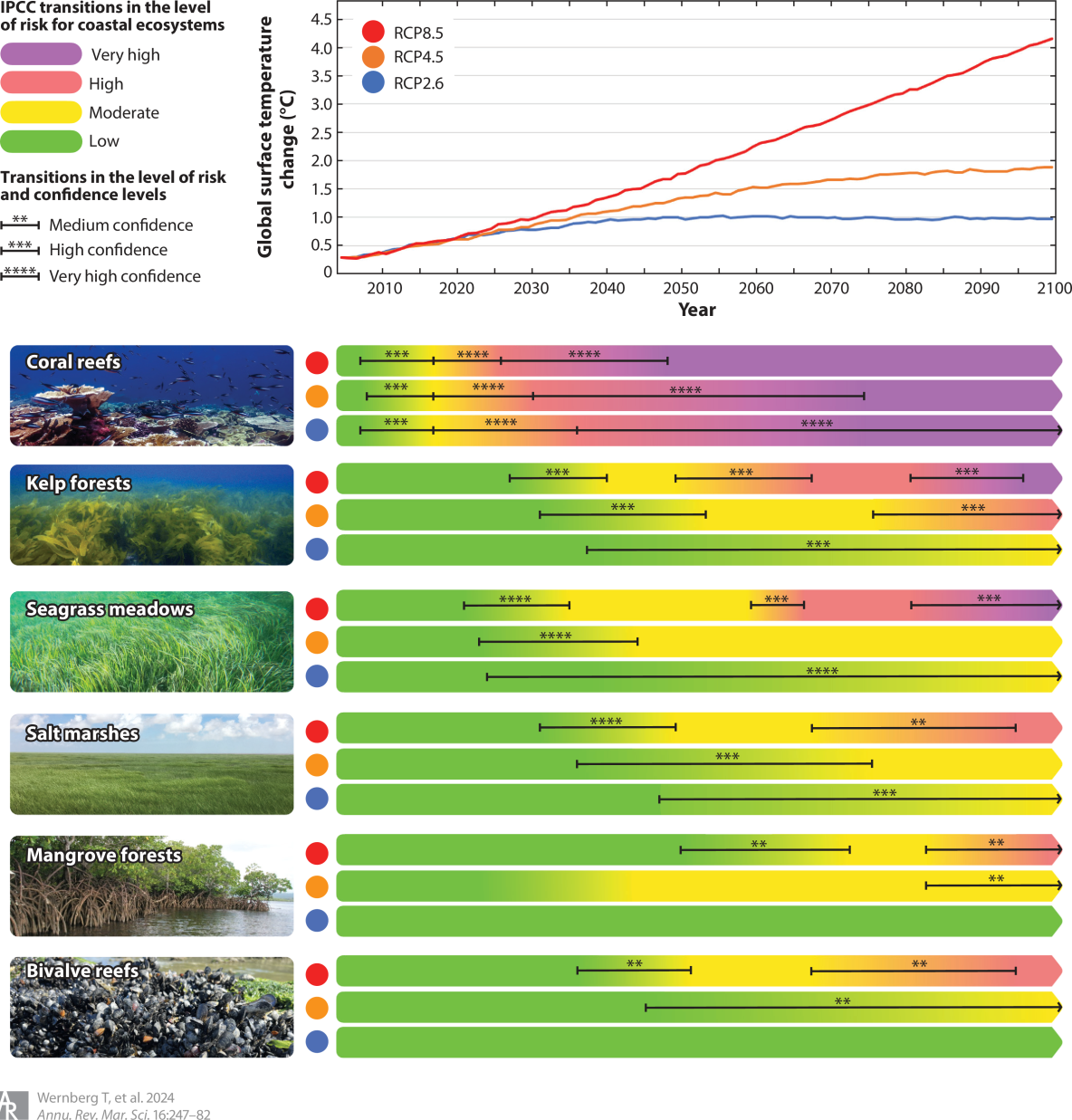
Risk scenarios for ecosystems under various RCPs,showcasing that coral reefs are already under stress and most at risk compared to other coastal systems. Source: Wernberg et al. 2024 with data from (Collins et al. 2013, Cooley et al. 2022). ref
Managing these threats requires global concerted action on climate change, however local management can play an important role in mitigating the severity of the threats and in assisting the potential for reef recovery.
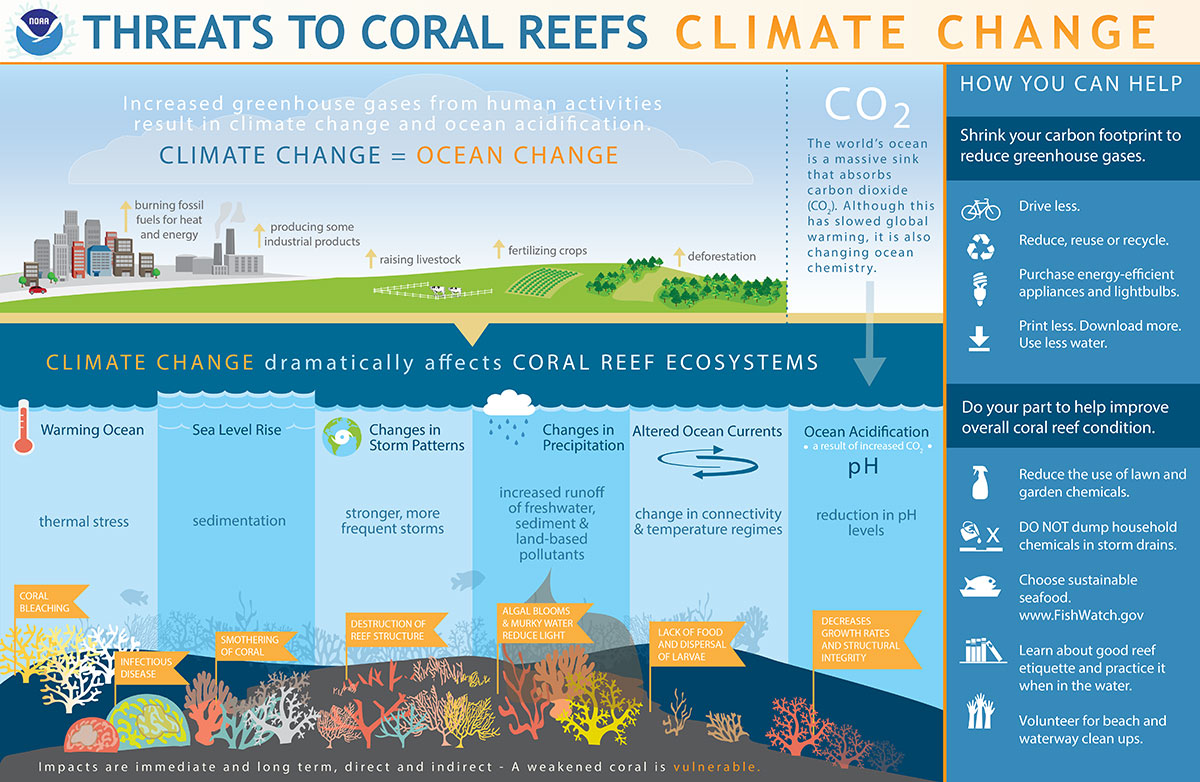
Climate change poses a major threat to coral reefs. Source: NOAA