Marine Zoning In St. Kitts And Nevis: A Design For Sustainable Management In The Caribbean
This paper details a marine zoning process for the island nation of St. Kitts and Nevis in the Eastern Caribbean, incorporating the use of marine spatial planning (MSP) and marine zoning to address multiple uses in the same ocean space. Multiple uses include coastal...The Intrinsic Vulnerability To Fishing Of Coral Reef Fishes And Their Differential Recovery In Fishery Closures
Coral reef fisheries play a role in livelihoods and local economies around the world, but the impacts of fishing on targeted species of reef fish is poorly understood. The authors of this study examined the vulnerability of different species of coral reef fish to...Herbivory And The Resilience Of Caribbean Coral Reefs: Knowledge Gaps And Implications For Management
This paper explores herbivory and how it affects the resilience of coral reefs in the Caribbean. The authors identify important knowledge gaps that limit our ability to predict when herbivores are most likely to support resilience. The authors explore: What processes...Towards A Network of Locally Managed Marine Areas (LMMAs) In The Western Indian Ocean
This study describes the increasing use of community based management of marine resources in the Western Indian Ocean (WIO) and assesses locally managed marine areas (LMMAs), producing the first regional inventory. LMMAs are managed for sustainable use and utilize a...Larval Dispersal And Movement Patterns Of Coral Reef Fishes, And Implications For Marine Reserve Network Design
Marine reserves are an effective tool for conservation and fisheries management in tropical marine ecosystems. They provide benefits to surrounding areas through the export of eggs, larvae, juveniles and adults to other reserves and fished areas. To increase...Marine Protected Area Networks: Assessing Whether the Whole is Greater than the Sum of Its Parts
This study looks at whether MPAs in a given network have synergistic benefits on ecological, economic, and social management levels. A proposed analytical framework assessed whether ecological effects across entire an MPA network are greater than the sum of the...New and improved Network Forum
Check out our interactive online community to connect and share with other coral reef managers and practitioners from around the world about marine management.
Assessing Habitat Risk From Human Activities To Inform Coastal And Marine Spatial Planning: A Demonstration In Belize
The expansion of existing and emerging ocean uses has negative effects on ecosystems that provide habitat for key species and benefits to people. Integrated coastal and ocean management needs straightforward approaches for understanding the effects people have on...
New Reef Resilience Online Course Launched
Check out the six new modules on stressors affecting coral reefs, guidance for identifying coral reef resilience indicators, design principles for resilient MPA networks, methods for implementing resilience assessments, and important communication tools for managers.
Perceived Benefits of Fisheries Management Restrictions in Madagascar
Support for fisheries restrictions in coastal villages along coral reefs in Madagascar was studied to help guide the development of effective management practices. In Madagascar, as in other places with low enforcement capacity, effective management depends on...Meta-Analysis Indicates Habitat-Specific Alterations to Primary Producer and Herbivore Communities in Marine Protected Areas
A recent global quantitative review and meta-analysis was conducted on the effects of MPAs on coral reef herbivores and primary producers to support management decisions. Based on criteria for the meta-analysis, which included only well-enforced no-take MPAs, 41...Fish with Chips: Tracking Reef Fish Movements to Evaluate Size and Connectivity of Caribbean Marine Protected Areas
Marine protected areas (MPAs) are commonly implemented in the Caribbean to address the rapid decline in the quality of coral reefs and in the abundance and body size of associated fish populations. However, MPAs are typically designed without sufficient knowledge of...Developing Marine Protected Area Networks in the Coral Triangle: Good Practices for Expanding the Coral Triangle Marine Protected Area System
The authors describe six case studies of marine protected area (MPA) networks in the Coral Triangle region that differ in scale and the approach taken to establish the networks. These are: Nusa Penida in Indonesia Tun Mustapha Park in Malaysia Kimbe Bay in Papua New...Sint Maarten – MPA Design
The Establishment of Man of War Shoal Marine Park
New resource for Caribbean coral reef managers
This new handbook provides tools, information, and management recommendations for coral reef managers highlighting the latest scientific research on reefs and resilience to inform management actions.
Designing Marine Reserves for Fisheries Management, Biodiversity Conservation, and Climate Change Adaptation
Coral reef ecosystem goods and services, such as fisheries, are threatened by local and global stressors. Effectively designed and managed marine reserve networks (areas closed to all extractive uses) can reduce local threats and build resilience of coral reefs. This...Global Conservation Outcomes Depend on Marine Protected Areas With Five Key Features
Dr. Graham Edgar and his 24 co-authors stirred up the marine conservation world with their recent article in which they review 87 MPAs at 964 sites (in 40 countries) around the world using data generated by the authors and trained recreational divers. Their overall...Interview with Dr. Graham Edgar
Dr. Graham Edgar and his 24 co-authors recently stirred up the marine conservation world with their article, “Global conservation outcomes depend on marine protected areas five key features”. In this article, they review 87 MPAs at 964 sites (in 40 countries) around the world using data generated by the authors and trained recreational divers.
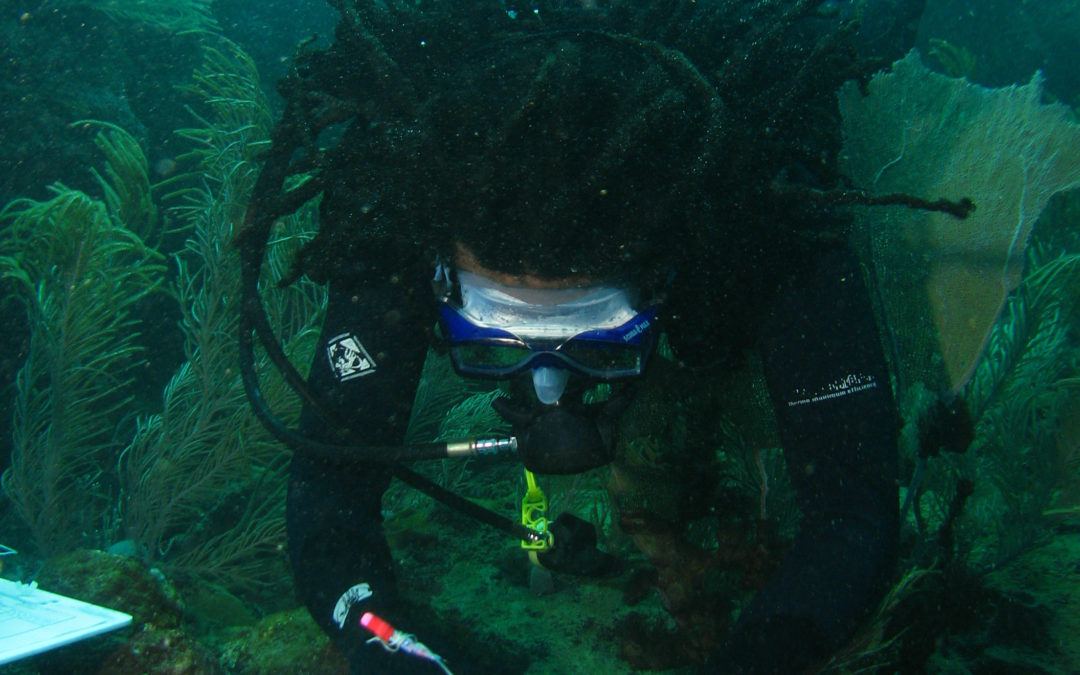
Understanding coral reef resilience in Tobago
Jahson Berhane Alemu I (a participant in our 2010 Training of Trainers Workshop) and co-author Ysharda Clement recently published the paper “Mass Coral Bleaching in 2012 in the Southern Caribbean”. For 6 months, they monitored approximately 650 colonies (composed of 30 taxa) at three sites across Tobago during a bleaching event in 2010.