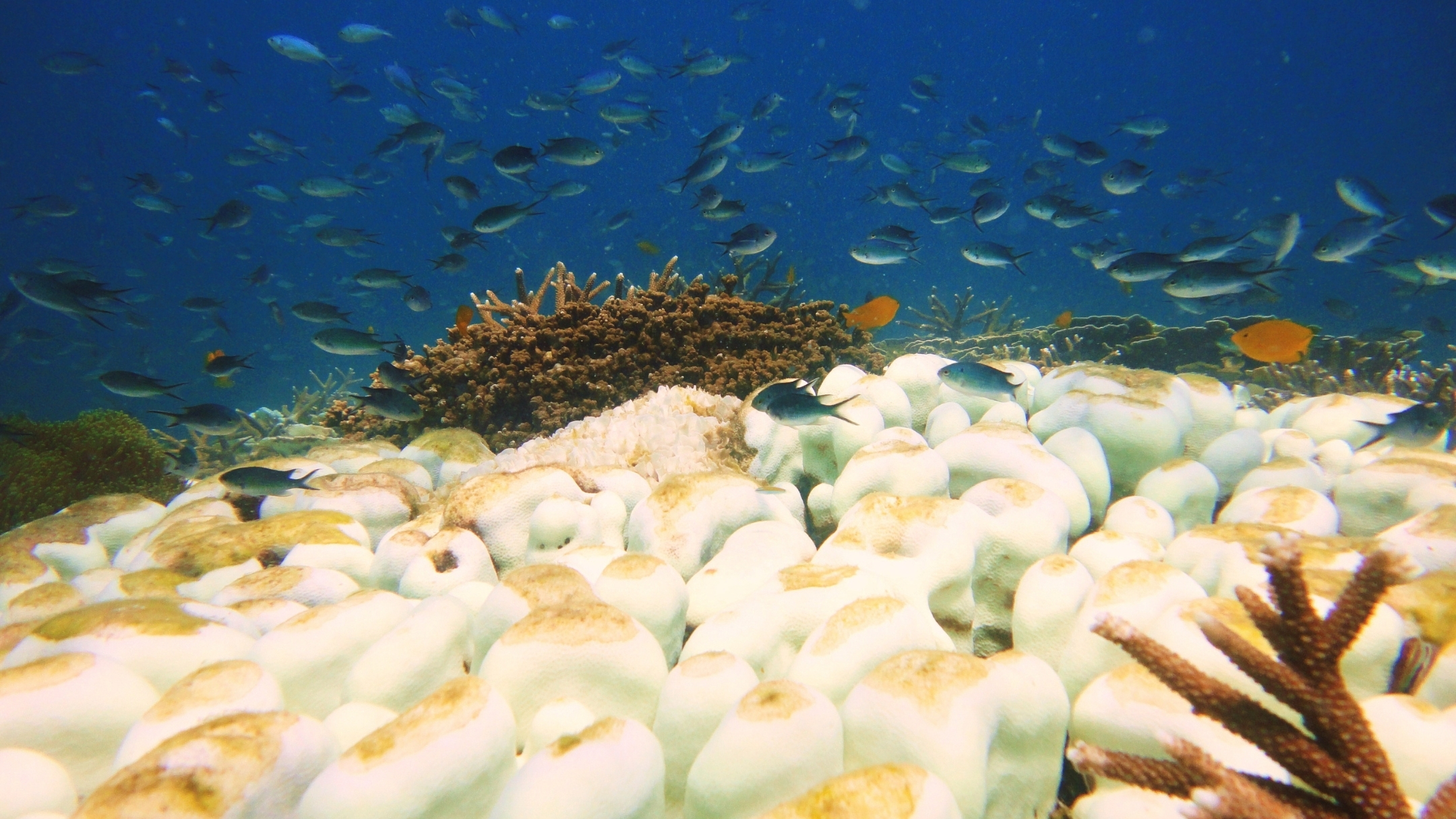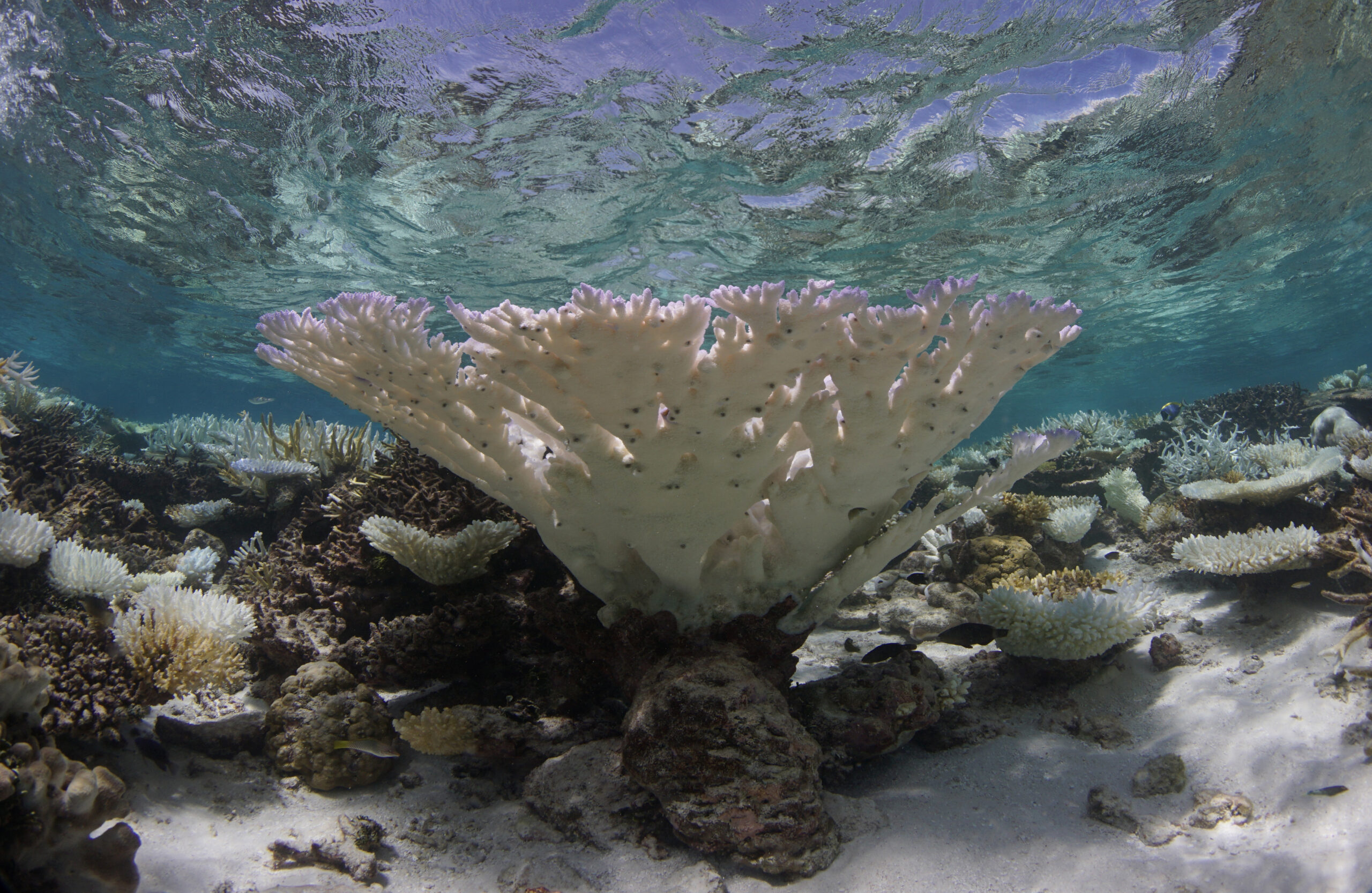
Invasive species pose a serious threat to coral reef ecosystems by displacing native species, altering habitats, and disrupting ecological balance. Reefs in Puerto Rico and across the Caribbean are particularly vulnerable due to the compounding effects of disease outbreaks, coral bleaching, overfishing, and other human-driven stressors. These impacts often leave bare areas on reefs, creating ideal conditions for colonization by invasive organisms such as soft corals. In the southwestern Caribbean, invasive soft corals have already overgrown reef habitats and displaced native species, including stony corals.

Latissimia ningalooensis is located in the center of the image, surrounded by Xenia umbellata. Photo © Daniel A. Toledo-Rodriguez
This study reports the detection of a new invasive soft coral species in Puerto Rico: Latissimia ningalooensis, originally native to Australia. First observed in March 2024, this is the second invasive soft coral species reported in Puerto Rico in under six months, following Xenia umbellata in October 2023. Genetic testing confirmed the identity of L. ningalooensis, and its appearance closely matches specimens from its native range. Its co-occurrence with X. umbellata suggests that both species may have arrived through similar pathways—possibly via the aquarium trade, shipping, or rafting on floating debris.
The arrival of L. ningalooensis raises significant concern as this species is known to be highly persistent. Early detection is critical, since eradication becomes nearly impossible after the species begins to reproduce.
Given these risks, the authors urge a coordinated regional response. Early detection is key: frequent reef monitoring and rapid identification of non-native species offer the best chance of stopping an invasion before it spreads. Eradicating the first colony may be the only effective window for control.
To protect Caribbean reefs, ongoing support is needed for collaborative monitoring programs, research on potential introduction pathways, and studies of how invasive species interact with native reef organisms. Proactive, well-funded regional management will be essential to addressing this emerging threat.
Implications for managers
- Conduct frequent reef surveys and establish protocols to quickly identify and remove invasive colonies before they reproduce and spread.
- Collaborate across the region to share data, monitor emerging invasions, and develop region-wide strategies for prevention and control.
- Invest in consistent, well-funded monitoring programs that can track the spread of invasive species over time.
- Train and involve divers, fishers, and community groups in recognizing and reporting unusual or non-native species to expand monitoring capacity.
Author: Toledo-Rodriguez, D.A., C.S. McFadden, N.M. Jiminez Marrero, J.D. Muñoz-Maravilla, A.J. Veglia, E. Weil and N.V. Schizas
Year: 2025
bioRxiv 2025.04.16.648000. doi: 10.1101/2025.04.16.648000