Applying Indonesia’s EVIKA Assessment Tool to Strengthen Management of Nusa Penida Marine Protected Area
Location
Indonesia
Summary
To assess protected area management effectiveness, the Indonesian Government developed its own tool called Evaluasi Efektivitas Pengelolaan Kawasan Konservasi Perairan (EVIKA). This annual assessment highlights management gaps and provides status updates for marine managers, including the Coral Triangle Center (CTC), which co-manages Nusa Penida marine protected area (MPA). The CTC addressed their management gaps by engaging stakeholders and the community, ensuring that their voices were integrated into adaptive management decisions.
The Challenge
Marine protected areas (MPAs) play a critical role in protecting Indonesia’s rich marine biodiversity, which provides essential ecosystem services and supports the livelihoods of millions of people living along the country’s coasts ref. To address biodiversity loss, support sustainable fisheries, and increase blue carbon conservation, the Government of Indonesia has committed to protecting 30% of its marine waters by 2045. Totaling 97.5 million hectares, with the additional goal of ensuring that 20 million hectares are effectively managed. This national target contributes to the global 30×30 initiative, which aims to conserve 30% of the world’s oceans by 2030 ref.
To measure progress toward these goals, Indonesia developed its own national protected area management effectiveness assessment tool, Evaluasi Efektivitas Pengelolaan Kawasan Konservasi Perairan (EVIKA). Established in 2020 by the Ministry of Marine Affairs and Fisheries (MMAF), EVIKA is a standardized framework for assessing MPA management effectiveness, identifying management gaps, and tracking progress across Indonesia’s national MPA network.
In collaboration with the MMAF and the Wildlife Conservation Society, the Coral Triangle Center (CTC) developed the training curriculum and technical guidance for implementing EVIKA assessments. These assessments are conducted annually by certified assessors who review management documentation, engage with stakeholders, and perform field verification. Assessment scores are organized into four management elements: inputs, processes, outputs, and outcomes, and are translated into three performance categories: Bronze (<50%, minimally managed), Silver (50–85%, optimally managed), and Gold (>85%, sustainably managed).
Spider diagrams allow managers to visualize strengths and weaknesses across management elements, helping prioritize future management actions.
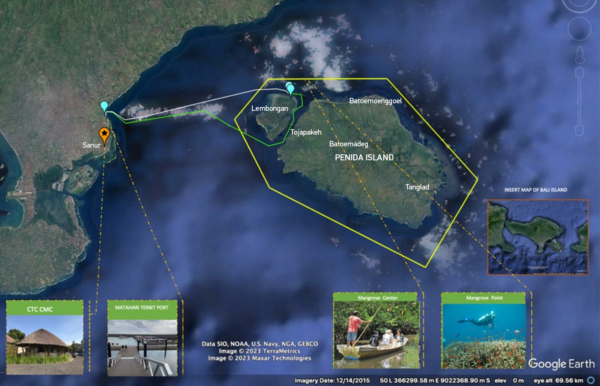
Map showing the boundary of Nusa Penida Marine Protected Area. Photo © Coral Triangle Center
Provincial governments manage conservation efforts in the Nusa Penida MPA in partnership with the CTC. Nusa Penida is located on the southeast coast of Bali and comprises 20,057 hectares, including the islands of Nusa Penida, Nusa Lembongan, and Nusa Ceningan. Habitats within the Nusa Penida MPA include mangrove estuaries, seagrass beds, and coral reefs ref. Although Nusa Penida achieved a Silver rating during its first EVIKA assessment in 2021, the assessment identified several management challenges. Continued pressures from unsustainable marine tourism, declining water quality, plastic pollution, and destructive fishing practices threaten the MPA.
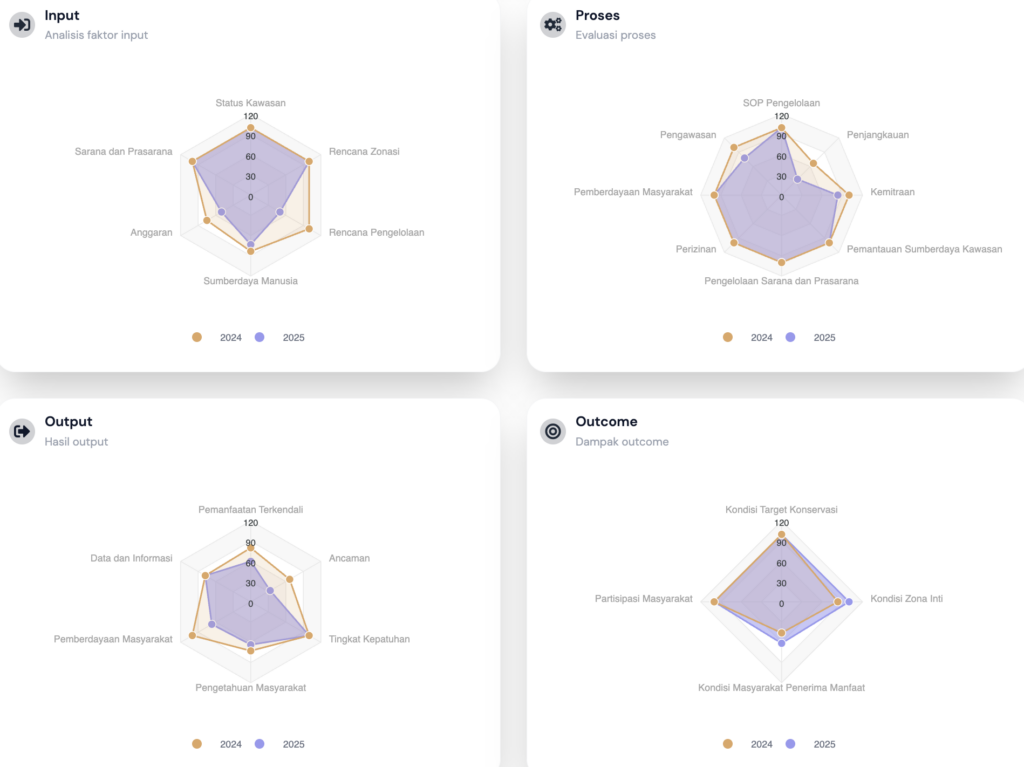
Caption: EVIKA spider diagrams comparing inputs, processes, outputs, and outcomes from 2014 and 2015. Photo © Sidako Ekosistem
Actions taken
Nusa Penida’s first EVIKA assessment in 2021 identified several priority management gaps, including formalizing MPA boundaries on national maritime maps, strengthening staff competencies, improving socio-economic monitoring, enhancing stakeholder coordination, and securing sustainable financing. To address these findings and support MPA effectiveness, the CTC and partnering agencies implemented a series of management actions.
Combining management effectiveness assessments with ecological and enforcement monitoring provides managers with stronger data-based evidence to inform adaptive management decisions. The CTC and key stakeholders conducted biological monitoring and enforcement surveys in 2025, generating new information on tourism activity and compliance within the MPA. Of the 44 tourism vessels identified, two were operating outside designated tourism zones. Drone-based monitoring strengthened surveillance by documenting vessel density and operator compliance. Drone footage recorded 74 boats and documented 11 tourism violations involving marine tourism vessels dropping visitors too close to a well-known manta ray cleaning station. These findings informed enforcement activities, improved coordination among agencies, and strengthened partnerships between the MPA Management Unit, Indonesian Navy, Marine Police, community organizations, and the CTC, which provides technical assistance and reporting protocols.
To address one of the priorities identified through EVIKA, the CTC supported the formal development and implementation of an MPA zoning system. The zoning plan established three primary management zones and seven subzones that accommodate marine tourism, fisheries, seaweed farming, and culturally significant site protection. Community members participated in identifying these sacred marine areas, highlighting the importance of ensuring that local knowledge and customary practices informed management decisions. The CTC also conducted community outreach to increase awareness of zoning regulations, sustainable fishing practices, and environmentally responsible tourism.
The CTC conducted financial analyses and willingness-to-pay studies evaluating entrance fees for marine tourism to address long-term financial sustainability identified during the 2021 EVIKA assessment. The study estimated that annual management costs would require approximately 6 to 8 billion Indonesian rupiah and suggested that visitor fees equivalent to approximately USD 5 to 10 per person could provide a sustainable funding solution for long-term MPA management.
How successful has it been?
Subsequent EVIKA assessments have enabled managers to track changes in management effectiveness while identifying new priorities for adaptive management. Although Nusa Penida achieved a Gold rating (85%) in 2024, the 2025 assessment resulted in a score of 76%, returning the site to the Silver category. This decrease was largely attributed to changes in government administration and associated budget reductions that affected staffing, enforcement, monitoring activities, and community outreach.
The financial sustainability assessment also demonstrated that tourism entrance fees could provide an important long-term funding source for MPA management. Although the local government has not yet adopted the proposed fee structure, the study established an evidence base for future financing discussions and highlighted sustainable funding as a continuing management priority.
Lessons learned from implementing EVIKA have contributed to improvements in Indonesia’s national assessment framework. In 2025, the CTC partnered with government agencies, MPA managers, and other stakeholders to review and refine the assessment methodology for EVIKA. The EVIKA 2.0 revision involved more than 100 participants to strengthen evidence-based indicators, improve scoring consistency, and incorporate Gender Equality, Disability, and Social Inclusion (GEDSI) considerations. This collaboration led to strengthening Indonesia’s MPA management effectiveness tool, providing a more comprehensive framework to help marine managers evaluate their adaptive management and long-term conservation outcomes.
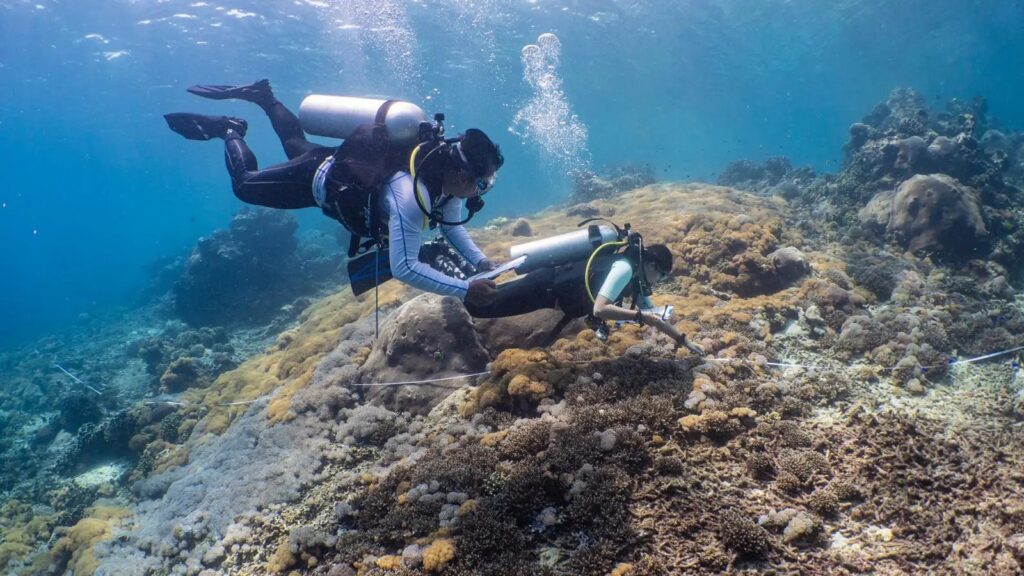
Caption: CTC conducting fieldwork in Nusa Penida. Fieldwork and training activities are often done in collaboration with local communities, NGOs, government agencies, scientists, and students. (Dominic Bryant/CTC)
Lessons learned and recommendations
National assessment tools provide a standardized approach for evaluating management effectiveness while allowing individual MPAs to identify site-specific priorities for improvement.
The EVIKA tool can directly inform adaptive management by highlighting management actions such as strengthening enforcement, zoning, monitoring, stakeholder engagement, and financial sustainability. Regularly reviewing and refining assessment tools helps ensure that management indicators remain evidence-based, practical, and responsive to evolving conservation priorities. The EVIKA assessment helped the CTC identify specific management gaps such as zoning, monitoring, stakeholder coordination, and sustainable financing.
The CTC utilized the EVIKA assessment as an opportunity to improve stakeholder and community engagement, strengthening overall conservation goals. They did this by including stakeholders and the community in biological monitoring, enforcement surveys, and drone-based surveys, and a willingness-to-pay study. These actions provided the CTC and their partners with more information on marine tourism pressures and compliance, while the willingness-to-pay study concluded that tourism could provide an important long-term funding source for MPA management. The CTC’s engagement with stakeholders, including government agencies, local communities, NGOs, technical experts, and other managing institutions, improved assessment accuracy, strengthened local ownership, and increased support for implementing management actions. Other key considerations include:
- Meaningful stakeholder engagement can strengthen management effectiveness while increasing community support and long-term compliance. Integrating traditional knowledge, customary laws, and cultural values into MPA management strengthened both conservation planning and community support for management actions.
- Being creative with sustainable financing mechanisms could assist with long-term financial sustainability, especially when main funding sources change. Financial sustainability assessments could pinpoint areas of growth and other potential funding sources.
- As EVIKA assessments are completed annually, they provide managers with a consistent method for tracking progress over time, evaluating management interventions, and informing future adaptive management decisions.
Funding summary
- Coral Triangle Center
Lead organizations
- The Nature Conservancy
- The Reef Resilience Network
- The Coral Triangle Center
Partners
Resources
- Coral Triangle Center. Adopt-A-Coral Program Update: Reviving Nusa Penida’s Reefs, One Fragment at a Time. (2025)
- Coral Triangle Center. Nusa Penida MPA. (2025)
- Coral Triangle Center. A “Silver Level” for Nusa Penida MPA. (2021)
- The Nature Conservancy. Indonesia’s Oceans and Coasts. (2023)
- Kawasan Konservasi Perairan Nusa Penida di Provinsi Bali
- World Wildlife Fund Inc. 30×30: A Guide to Inclusive, Equitable and Effective Implementation of Target 3 of the Kunming-Montreal Global Biodiversity Framework. (August 22, 2023)
- RRN: Indonesia: Framework for Evaluating the Management Effectiveness of MPAs