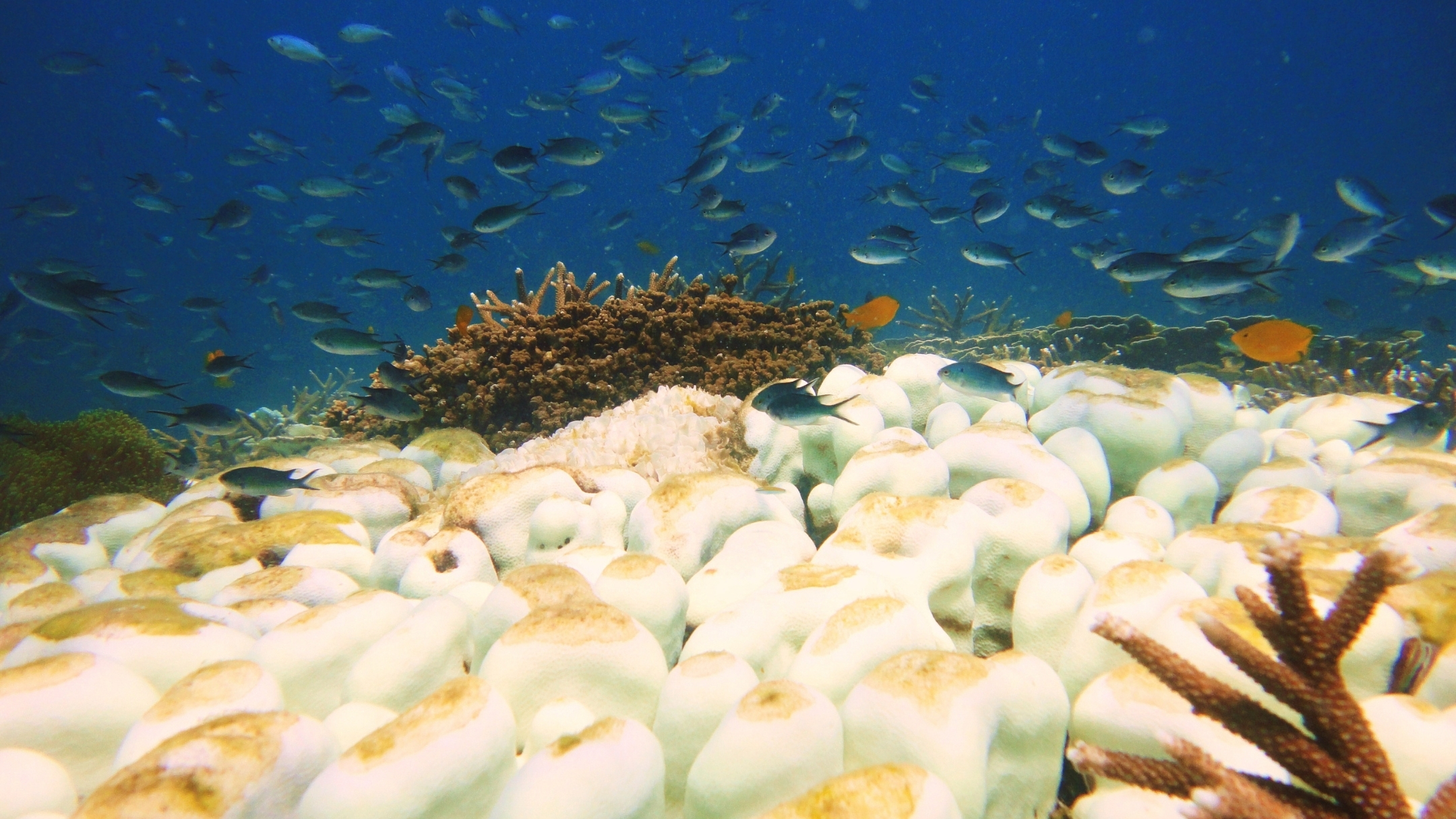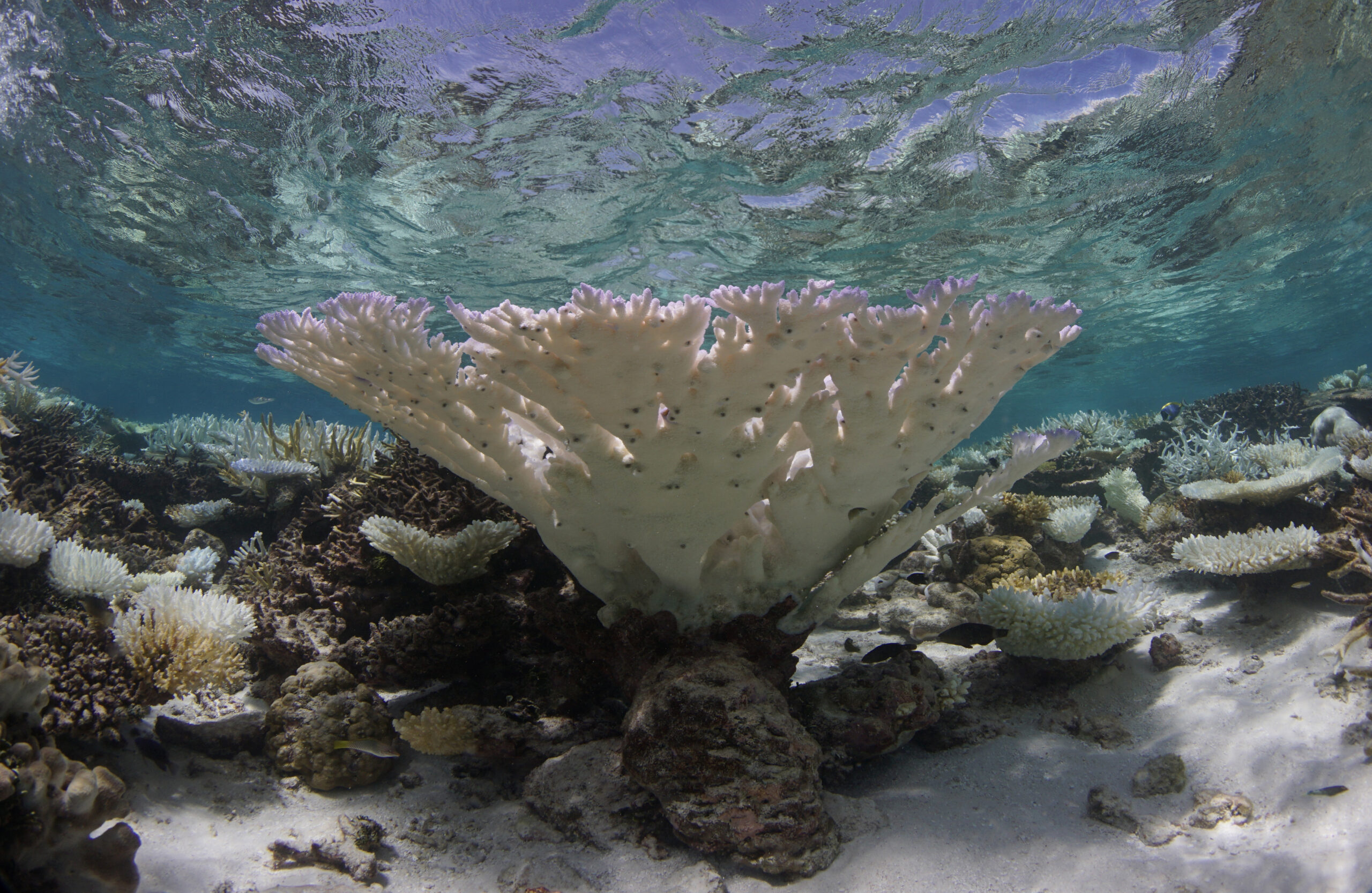
According to NOAA’s August 2026 ENSO update, El Niño is strengthening rapidly, with more than a 90% chance of a very strong event during fall and winter 2026–27 and a 69% chance that it could reach historic strength. NOAA’s Coral Reef Watch is already reporting elevated bleaching risk across parts of the Pacific, with the potential for widespread bleaching.
Reefs are entering this period already stressed by the recent fourth global coral bleaching event. For coral reef managers and restoration practitioners, the coming months warrant heightened preparedness, monitoring, and contingency planning to reduce additional stress and improve coral survival.
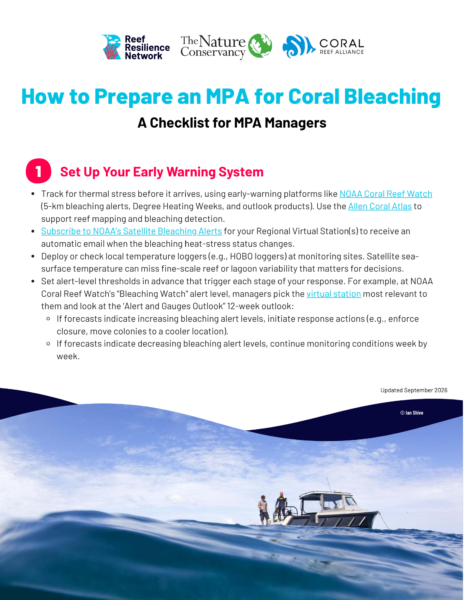
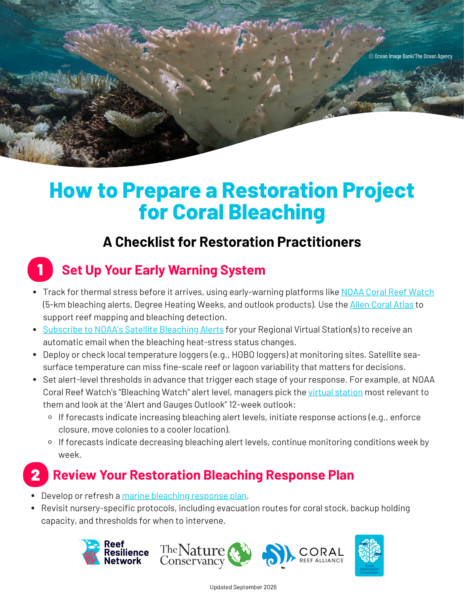
Ahead of the heat, and to mark Coral Bleaching Awareness Month, the Reef Resilience Network, in partnership with the Coral Reef Alliance and the Coral Restoration Consortium, has developed two short resources to help you assess your preparedness and identify actions you can take before temperatures rise:
 |
|
We have compiled Network resources and resources from our partners to help you understand, prepare for, monitor, and respond to coral bleaching events:
Key Resources
- CORAL’s Coral Bleaching Toolkit & Comprehensive Guide provides practical resources to help reef managers and communities understand and respond to coral bleaching, including remote sensing tools, on-site monitoring tools, online apps for coral bleaching, and a checklist for how to mobilize and protect.
- ICRI’s Coral Bleaching Hub brings together key messages and resources on coral bleaching, its impacts and causes, and solutions being implemented. The Hub supports managers and policymakers with policy and planning and encourages cooperation among ICRI members.
Understand Coral Bleaching
Learn more about what coral bleaching is, what causes it, and how reefs respond to thermal stress:
Prepare for Bleaching
Develop or update your response plan and identify actions that can be taken before thermal stress arrives:
- Use the Network’s Bleaching Response Plan Worksheet to help develop or update a bleaching response plan
- How to Prepare an MPA for Coral Bleaching
- How to Prepare a Restoration Project for Coral Bleaching
- Explore CORAL’s Coral Bleaching Checklist for Reef Managers and Dive Operators
Set Up Your Early Warning System
Track changing conditions and anticipate thermal stress before it reaches your reefs.
- NOAA Coral Reef Watch provides 5-km bleaching alerts, Degree Heating Weeks, and outlook products to track heat stress and bleaching risk
- Subscribe to NOAA’s Satellite Bleaching Alerts to receive automated updates for your reefs
- The Allen Coral Atlas Bleaching Monitoring System provides satellite-based monitoring of coral reef bleaching at a global scale
Monitor Through a Bleaching Event
Monitoring before, during, and after a bleaching event can help you understand impacts, identify differences in coral responses, and use what you learn to adapt future management and restoration strategies.
- Explore NOAA’s Guidance for Monitoring the Impacts of Heat Stress and Coral Bleaching Events
- Listen to the Reef Exchanges podcast episode Help from on High: Monitoring Coral Bleaching with Drones
- Read the article summary Six Decades of Global Coral Bleaching Monitoring: A Review of Methods and Call for Enhanced Standardization and Coordination
Build Climate Change into Long-Term Management
Preparing for the next bleaching event is critical, but so is building climate change into longer-term reef management and planning. Explore these additional Network resources:
- Climate Adaptation Toolkit
- Resilience-Based Management Online Course
- Article summary: Diversification of Refugia Types Needed to Secure the Future of Coral Reefs Subject to Climate Change
- Case study: Climate-Smart Management Planning in the Bahamas
- Podcast episode: Trust the Process: Climate Adaptation Planning in The Bahamas
Restoration-Specific Resources for Coral Bleaching Preparedness
- How to Prepare a Restoration Project for Coral Bleaching
- Coping with the 2023 El Niño Bleaching Event webinar recording and question and answer document
- Coral Restoration Consortium Bleaching Guidance – Prepare, Act, Monitor