Using Protected Area Management Effectiveness (PAME) Assessment for Adaptive Management in the East Portland Special Fishery Conservation Area, Jamaica
Location
Jamaica
Summary
In July 2025, managers from The Alligator Head Foundation (AHF), The Nature Conservancy Caribbean Program (TNC-Caribbean), and Caribbean government partners came together to review the management effectiveness of Jamaica’s East Portland Special Fishery Conservation Area (East Portland SFCA) and support an update to its management plan. The team had previously completed a global rapid assessment using the Management Effectiveness Tracking Tool (METT-4) and wanted to focus on one of the assessment’s lowest-scoring areas: the monitoring and evaluation system used to inform and adapt management.
A training session hosted by TNC-Caribbean and the Reef Resilience Network (RRN) provided a framework for the team to review their MPA’s strategy, identify what was working and what was not, and pinpoint data gaps. This process helped the local team prioritize key actions to improve MPA performance and build capacity to use monitoring data and Protected Area Management Effectiveness (PAME) assessments to inform decision-making.
This case study demonstrates the importance of utilizing assessment tools and other key information to gain a holistic understanding of management strengths, challenges, gaps, and successfully integrate priority actions into management plans.
The challenge
The East Portland SFCA was formally recognized in 2016 under the Jamaican Fishing Industry Act and is co-managed by the Ministry of Industry, Commerce, Agriculture and Fisheries (MICAF) and the Alligator Head Foundation (AHF). Its mission is to revitalize natural systems and restore marine life. Spanning 600 hectares on Jamaica’s northeast coast, the marine reserve protects coral reefs, mangroves, seagrass beds, and deep-water habitats. In addition to climate change, coral disease, and land-based sources of pollution, the area has experienced a rapid decline in coral cover following the loss of herbivorous species, which has allowed macroalgae to increase and compete with corals for space. From 2019 to 2023, macroalgal cover increased by 40%, while coral cover decreased by 12%. To address these threats, AHF managers needed to understand whether existing management actions were being implemented effectively and where improvements could be made.
AHF completed its first METT assessment for the East Portland SFCA in 2024 to identify management strengths and weaknesses, highlight gaps, and provide an overall assessment of management effectiveness. METT-4, developed by the International Union for Conservation of Nature and World Wildlife Fund, is an Microsoft Excel-based self-assessment tool that uses a series of scored questions to evaluate management effectiveness across key management elements, including planning, inputs, processes, outputs, and outcomes. Scores for each management element allow managers to identify areas of strength and areas requiring improvement across the protected area. Although the METT assessment identified where management could be strengthened, it did not provide a process for determining which actions should be prioritized or how assessment findings could be translated into adaptive management to improve the likelihood of achieving intended MPA outcomes.
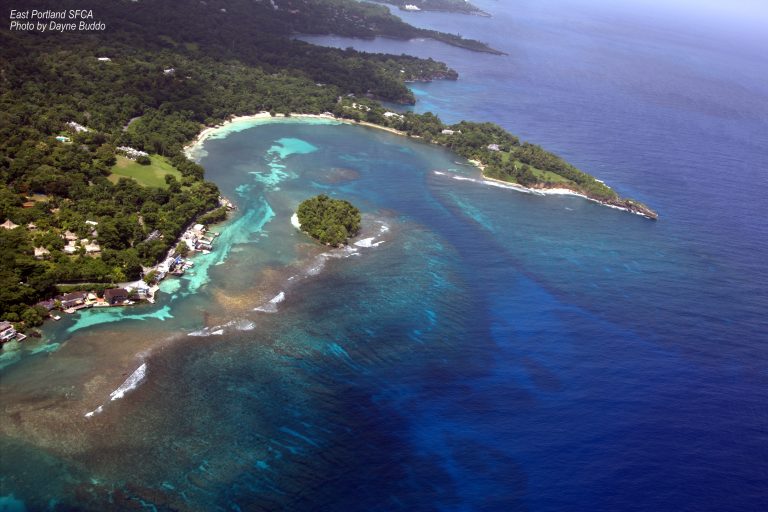
Aerial view of the East Portland Special Fishery Conservation Area Photo © Dwayne Buddo/Alligator Head Foundation
Actions taken
To address this challenge, TNC-Caribbean and the RR N introduced an adaptive management framework through a regional workshop. The framework gave the Jamaican team a structured approach for interpreting the completed METT assessment, developing a theory of change, and drawing on other sources of information, such as monitoring results and the expertise of staff and partners. With this information in hand, they were able to identify priority management actions for updating the management plan.
The Jamaican team included members from AHF, TNC-Caribbean, and Jamaican government partners, bringing together expertise in fisheries, water quality, monitoring, management, and policy. This diverse representation reflected the collaborative approach needed for adaptive management, with partners contributing different sources of knowledge to assess the site’s management effectiveness and identify priorities. Together, the team reviewed the East Portland SFCA’s management effectiveness and prioritized actions tailored to the site’s specific needs.
The first day of the workshop laid the foundation for site-level adaptive management. Participants then clarified their site’s intended conservation and socio-economic outcomes, identified key threats, and developed atheory of change to identify the strategies and interventions needed to address those threats and achieve the desired outcomes. This was followed by site-level analyses that combined ecological monitoring and staff experience to identify what was working well, what was not, and where information gaps remained. Participants then considered how these findings could be used to support adaptive management and evidence-based decision-making.
The third day of the workshop focused on identifying and addressing information gaps that limited participants’ ability to assess progress toward the outcomes identified in their theory of change. For example, teams identified areas where baseline data were lacking and where additional data collection was needed to better understand progress toward site-level outcomes. Lastly, representatives from each team practiced communicating their adaptive management findings, particularly the rationale for their recommended priority actions and how those actions would contribute to achieving their site’s intended outcomes. Teams exchanged site-specific experiences, showcased successes and challenges, discussed potential next steps, and received feedback from fellow managers.
As a result of the workshop, the AHF team gained a better understanding of the principles of adaptive management and identified priority actions to strengthen the site’s ability to achieve conservation and socio-economic outcomes.
Priority actions included
- Hiring key staff positions
- Strengthening ecological monitoring to establish baselines and document trends
- Increasing enforcement capacity and efficacy
- Enhancing community outreach and participation
- Developing a coral restoration strategy
Using materials developed during the workshop, AHF prepared a successful funding proposal that supported the hiring of a fisheries outreach officer, one of the priority actions identified during the workshop. The workshop provided a structured process for moving from management assessment to implementation by helping AHF prioritize actions that could be incorporated into the site’s adaptive management approach.
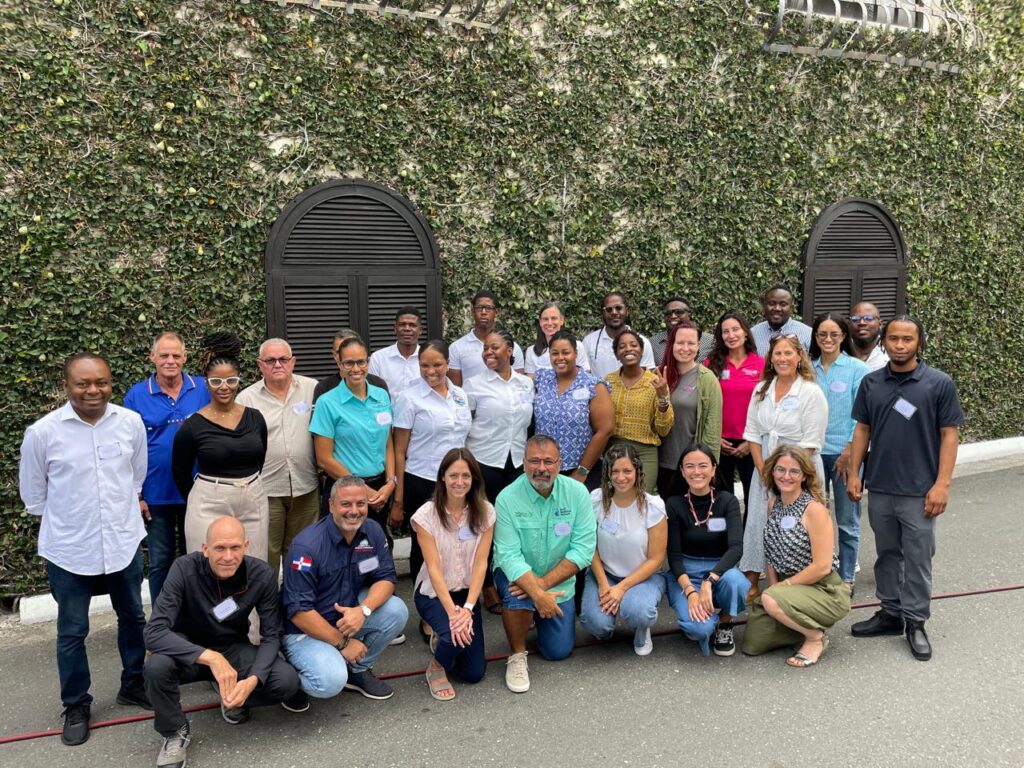
Participants at the 205 Caribbean Protected Area Management Effectiveness Workshop, Jamaica. Photo © TNC
How successful has it been?
Following the PAME Workshop, AHF implemented several of the priority actions identified through the adaptive management process. Using workshop outputs, AHF secured funding to hire a fisheries outreach officer, strengthening community engagement by increasing participation in management decisionsr. To address gaps identified in ecological monitoring, five community members received SCUBA and ecological monitoring training, increasing the organization’s capacity to collect information needed to understand changes in the ecological system and progress toward the intended outcomes. AHF also developed a coral restoration plan, including site selection, water quality assessments, and coral restoration certification. Additional actions included hiring a Sanctuary Manager, increasing enforcement visibility through randomized patrols, expanding land-based environmental monitoring, and installing solar infrastructure to improve long-term operational sustainability.
Implementation of these priority actions was reflected in subsequent improvements in management effectiveness. Compared to the 2024 METT assessment, the 2026 METT results showed improvements across every management element, with the overall management effectiveness score increasing from 26.5% in 2024 to 63.0% in 2026. The most significant gains were observed in Processes (12.9% to 60.6%), Outcomes (0% to 66.7%), and Inputs (55.6% to 76.2%), demonstrating stronger implementation of management activities and increased organizational capacity
METT evaluates management effectiveness by scoring five management elements: planning, inputs, processes, outputs, and outcomes. Comparing scores over time allows managers to measure progress and identify where additional improvements are needed. The table below illustrates changes in AHF’s METT scores between 2024 and 2026, highlighting substantial improvements following implementation of the priority management actions identified during the PAME Workshop.
Summary of Changes in AHF METT Scores and Management Effectiveness 2023 vs 2026
| Element | Element score /Maximum Element Score 2023 | 2023 Element % | Element score /Maximum Element Score 2026 | 2026 Element % |
|---|---|---|---|---|
| Planning | 11/18 | 61.11% | 15/21 | 71.43% |
| Inputs | 10/18 | 55.56% | 16/21 | 76.19% |
| Process | 7/54 | 12.96% | 40/66 | 60.61% |
| Outputs | 3/25 | 20% | 4/12 | 33.33% |
| Outcomes | 0/12 | 0% | 12/18 | 66.67% |
| Total | 31 | 26.5% | 138 | 63.04% |
Though significant advances were made across most management elements, opportunities for further improvement remain, particularly within the Outputs (33.3%) and Processes (60.6%) elements, which remain below their maximum potential scores. Future priorities include strengthening staff capacity to ensure continuity during periods of leave or turnover, improving documentation and reporting systems, expanding community participation in co-management initiatives, and continuing ecological and socio-economic monitoring. In addition, many externally funded projects do not provide long-term salary support, highlighting the need to develop sustainable financing mechanisms that can maintain management capacity over time.
The improved METT scores demonstrate that AHF strengthened management effectiveness by targeting priority actions and using the principles of adaptive management, identified in the workshop. However, it is still too early to determine whether these management improvements have resulted in measurable ecological and socio-economic changes. Continued ecological and socio-economic monitoring will be needed to evaluate whether stronger management ultimately leads to healthier coral reefs and improved biodiversity and community benefits, particularly as climate change, sea-level rise, sargassum blooms, coral disease, and declining water quality continue to affect the East Portland SFCA.

Image: AHF performing coral reef monitoring Photo © David Lee, 2026
Lessons learned and recommendations
The Caribbean PAME Workshop provided a structured process for AHF and other Caribbean marine managers to review their MPAs’ management effectiveness and strengthen adaptive management practices with the ultimate goal of improving the likelihood of achieving conservation and socio-economic outcomes. While METT assessments help identify areas for improvement, completing the assessment alone is not enough to strengthen management effectiveness. The Jamaican team included policymakers, MPA managers, and technical experts and knowledge holders, bringing together different perspectives and expertise needed to support adaptive management.
The workshop provided a foundation for these partners to understand the principles of adaptive management, use PAME assessments and ecological and socio-economic monitoring information to evaluate progress and identify gaps, and prioritize actions for inclusion in management and annual work plans. Participants also learned how to develop monitoring indicators to track progress toward management actions and social and ecological outcomes, and strengthened their capacity to use monitoring data and PAME assessments to adapt management plans and improve effectiveness.
Key lessons from the East Portland SFCA include:
- When using a completed METT assessment, combine identified management gaps with other information and consultations to interpret results and prioritize management actions.
- The PAME Workshop provided AHF with a structured adaptive management process to move from assessment to implementation and helped ensure that their limited staff time and funding were directed toward the highest-priority management needs.
- AHF’s 2026 METT score showed improvement from 2023; however, adaptive management should be viewed as an ongoing process rather than a one-time exercise. Repeating METT or other PAME assessments allows managers to evaluate whether management interventions are improving effectiveness and to adjust priorities as new challenges emerge.
- Improvements in management effectiveness may occur well before measurable ecological or socio-economic improvements. Continued monitoring of a theory of change is needed to determine whether stronger management ultimately leads to healthier coral reefs, improved biodiversity, and community benefits.
Funding summary
- The Nature Conservancy Caribbean
- Alligator Head Foundation
- National Conservation Trust Fund of Jamaica
Lead organizations
- The Nature Conservancy Caribbean
- Reef Resilience Network
- Alligator Head Foundation
Partners
- Anna-Cherice Ebanks-Chin (TNC-Caribbean)
- Gina-Marie Maddix (TNC-Caribbean)
- Alex Simpson (AHF)
- Dexter Colquhoun (AHF)
- Deandra Roberts (Jamaica National Fisheries Authority)
- Hugarcia Green (Jamaica National Environment & Planning Agency)
- Chanel Raynor (Jamaica National Environment & Planning Agency)
- Meghan Gombos (Sea Change Consulting)
Resources
- The Nature Conservancy
- Alligator Head Foundation
- NANO (or NF-POGO Alumni Network for the Ocean)
- Summary of AHF METT Scores (2023 and 2025)
- Colquhoun, D. D. S. (2022). The Assessment of Water Quality, Plankton and Trophic Status Towards Creation and Management of a Special Fishery Conservation Area (SFCA) in East Portland, Jamaica (Doctoral dissertation, University of the West Indies, Mona, Jamaica).