
Connected Systems

Coral reefs are often associated with seagrass beds and mangroves. These habitats can be highly connected, and this connectivity can be especially important in maintaining the healthy functioning of coral reefs.
Seagrass beds can be found in the back reef, lagoons, and sheltered locations. They interact with the reef by receiving and stabilizing sediments, nutrient cycling, and providing nursery habitat for some fish and invertebrate species. ref Seagrass beds may also reduce levels of coral disease. ref
Mangroves are found on coastlines and interact with reefs by stabilizing land-based sediment, nutrient cycling, and providing a nursery habitat for coral reef organisms. Other benefits from mangroves and seagrasses include buffering the impacts from waves and storms, ref acting as carbon sinks, and reducing impacts from ocean acidification. ref
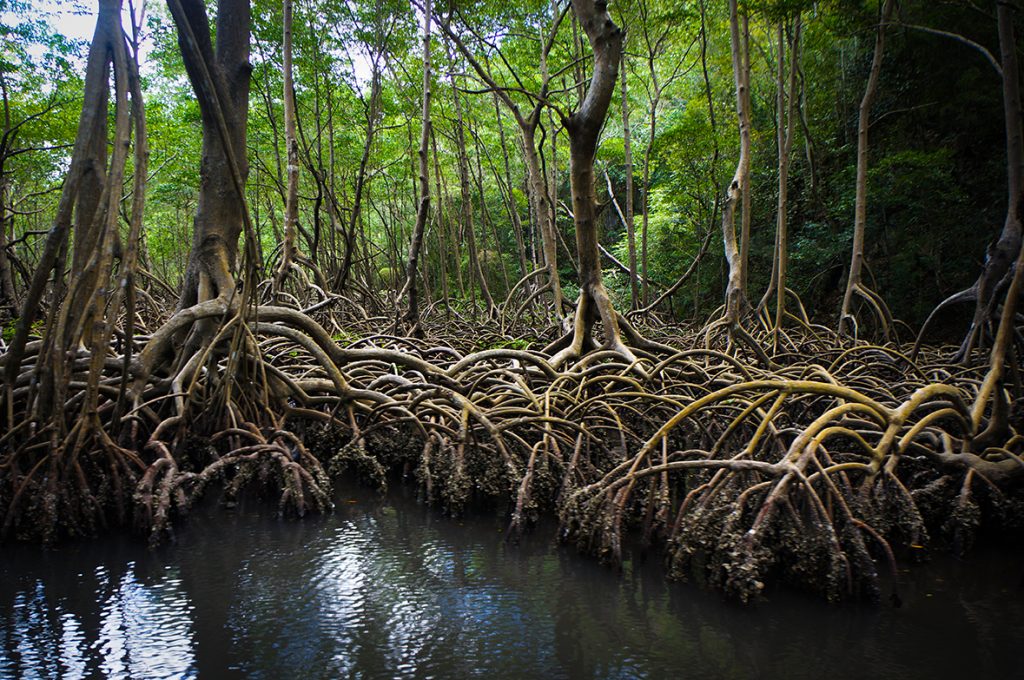
Mangroves in the Dominican Republic. Photo © Rachel Docherty/Flickr Creative Commons
Connection with Human Systems
Coral reefs are also intrinsically linked with neighboring human communities. The health, function, and resilience of coral reef ecosystems is tightly linked to local human populations, their livelihoods, and associated impacts on coastal processes. In turn, human communities benefit from a wide range of reef ecosystem services.

The differences in coral reef health between reefs close to population centers and remote reefs. Coral reefs near population centers are degraded with fewer, unhealthy coral colonies, and impaired fish populations. Remote coral reefs have fewer threats to combat. While they would still be impacted by threats such as coral bleaching and illegal fishing, these reefs tend to be more resilient due to minimal direct human influence. Source: NOAA Coral Reef Conservation Program and University of Maryland Center for Environmental Science