
MPA Management Effectiveness

What is Protected Area Management Effectiveness (PAME)?
Protected Area Management Effectiveness (PAME) refers to how well a protected area, such as a Marine Protected Area (MPA), is managed to achieve its goals. While MPAs are powerful tools for conserving marine environments and supporting coastal communities, simply designating an area is not enough. Effective management must be in place to meet intended ecological, socio-cultural, and economic outcomes.
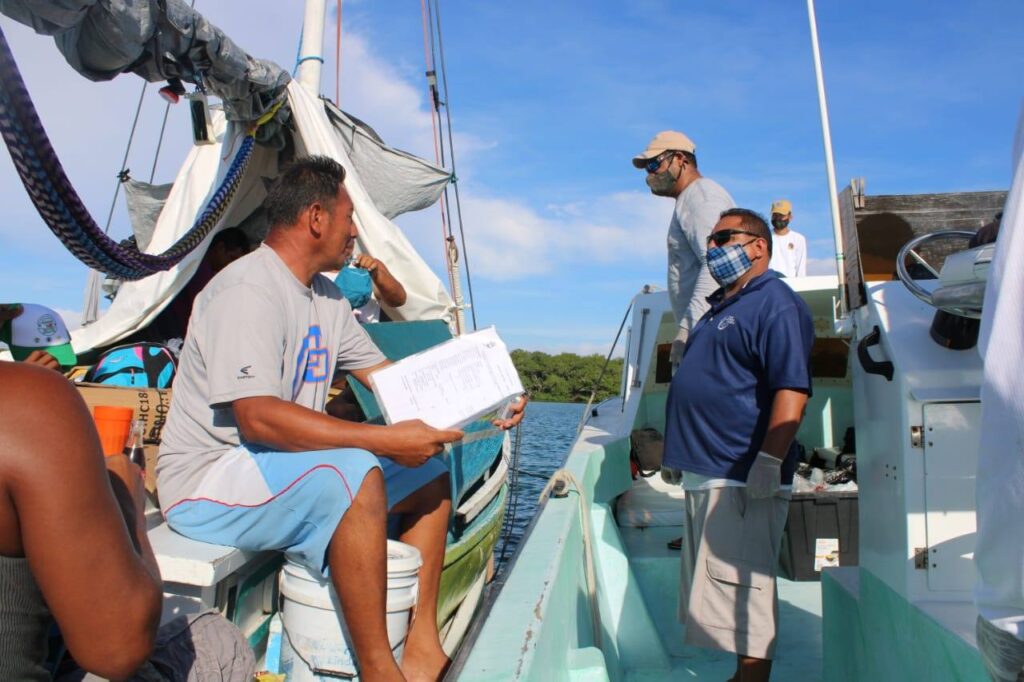
Boat-to-boat outreach activity at Lighthouse Reef Atoll, Belize. Photo © Belize Audubon Society
The diagram below presents a simplified theory of change (ToC) for an effectively managed MPA (click to enlarge). It illustrates how local governance, social and economic conditions, combined with management actions, are expected to lead to desired medium-term results and long-term outcomes. All of the components in this ToC are critical for effective management.
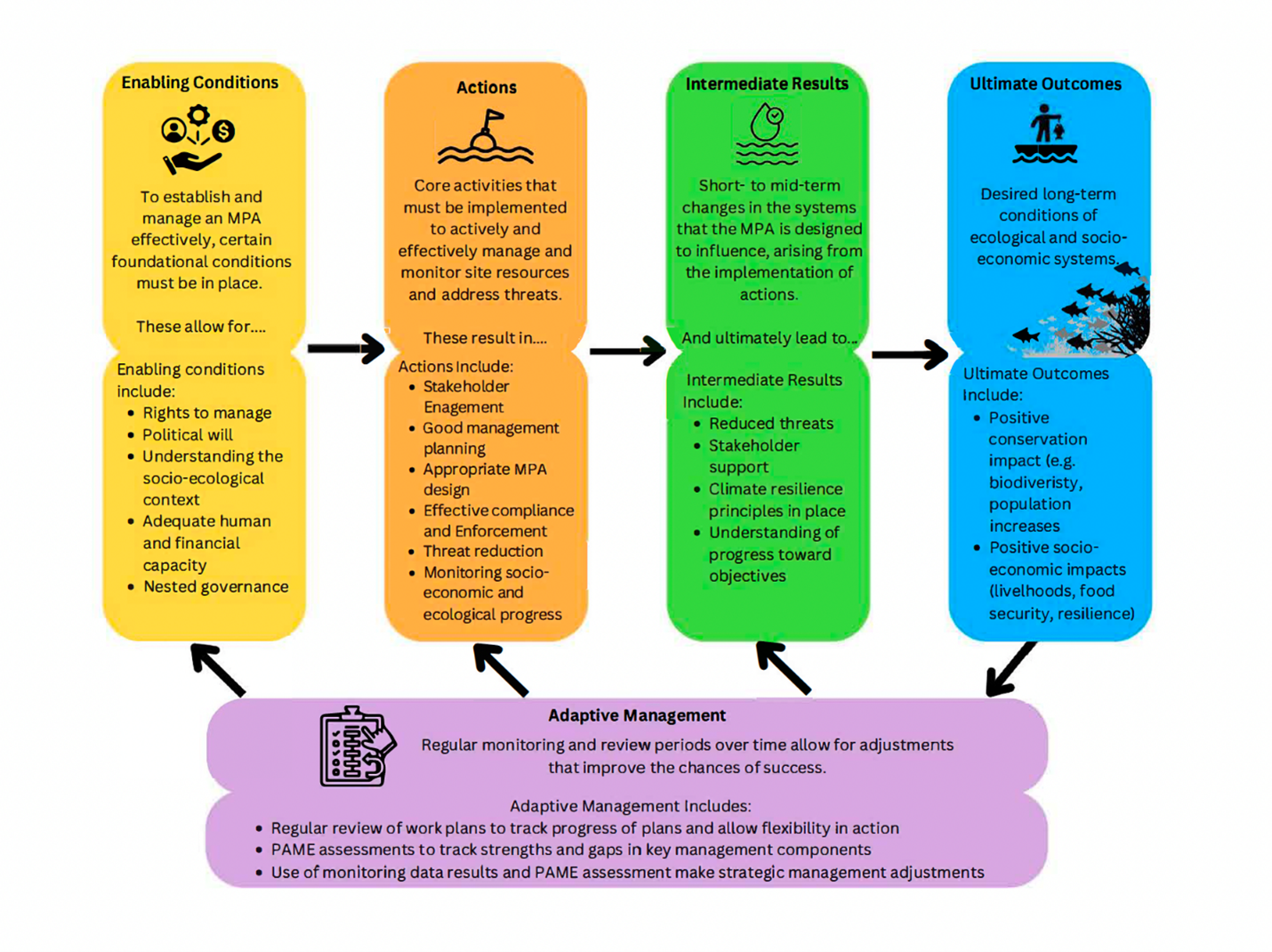
Example of a theory of change for protected area management effectiveness (PAME).
Why Review Management Effectiveness?
MPA managers, under ideal circumstances, should plan around a management cycle that enables them to review and adjust to improve outcomes. The graphic below provides more details about the phases of a management cycle.
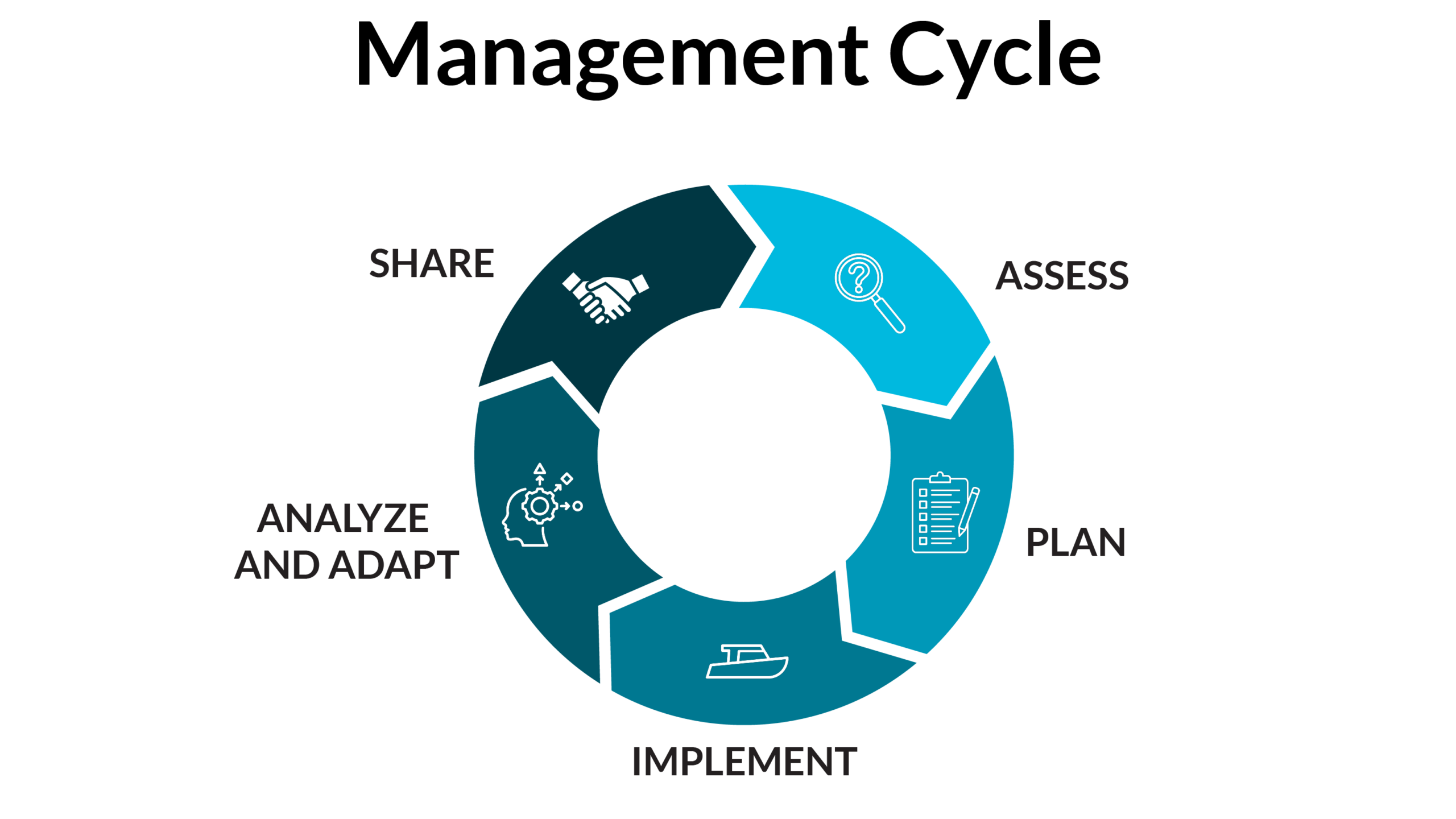
Phases of the management cycle: Assess – assesses enabling conditions and other critical information about the current situation needed to plan and implement an MPA; Plan – includes defining clear objectives for the MPA; Implement – strategies and actions identified in the management plan are put into action; Analyze and Adapt – monitoring data is assessed for effectiveness of the management programs; Share – lessons from the adaptive management process are shared with relevant stakeholders.
A site does not need to be at the beginning of the management cycle to benefit from a review of management effectiveness. Key components of PAME should be evaluated throughout every phase of the management cycle, incorporating best practices to implement at each stage. Regularly reviewing and evaluating these key components, including governance structures, planning and design, operational systems and threat abatement strategies, can guide adaptive management, leading to greater chances of achieving outcomes. As such, considerations of management effectiveness should be embedded in day-to-day management culture.
There are also formal PAME assessment tools or evaluations, such as the Management Effectiveness Tracking Tool (METT), that can be used to measure how effectively PAME components are implemented at a site over time.
Undertaking a PAME assessment requires time, thoughtful planning, and a willingness to reflect honestly on an MPA’s performance. It should be approached with an open mindset, viewing challenges not as failures, but as opportunities to improve management and better understand an MPA’s performance.
International Commitments to PAME
Management effectiveness is gaining global attention as more MPAs are created. Beyond simply measuring the area covered by MPAs, there is now a growing focus on evaluating how effectively they reach their goals. International commitments, such as the Convention on Biological Diversity (CBD) Target 3, call for at least 30% of land and sea areas to be effectively and equitably managed by 2030. This “30x30” target highlights not just area coverage, but also ecological representation, connectivity, and meaningful outcomes for nature and people.

Adoption of the Kunming-Montreal Framework, Montreal, Canada. Photo © UN Convention on Biological Diversity, CC BY 2.0
Tools like the 30x30 Solutions Toolkit and 30x30 Progress Tracker have been created to support countries in implementing and reporting on Target 3. These resources emphasize the importance of PAME assessments as a means of demonstrating real progress and accountability in marine conservation.
See the Management Effectiveness for Marine Protected Areas Online Course for more information about how to effectively manage MPAs to meet intended ecological, socio-cultural, and economic outcomes.
Resources
Evaluating Effectiveness: A Framework for Assessing Management Effectiveness of Protected Areas
Management Effectiveness Tracking Tool (METT)
Designing Effective Locally Managed Areas in Tropical Marine Environments
Global Coral Reef Monitoring Network
Monitoring Guidelines and Protocols - Ecological
The Global Socioeconomic Monitoring Initiative for Coastal Management Resource Library