by Michelle Graulty | Sep 17, 2026 | News, Webinars
Through a series of expert presentations, the webinar examined the climate drivers behind this year’s elevated bleaching risk, provided a global overview of the findings from the Status of Coral Reefs of the World: 2025 report, and showcased practical examples of climate adaptation and reef resilience efforts from Indonesia and the Mesoamerican Reef. The session concluded with a panel discussion and audience Q&A.
by Michelle Graulty | Sep 16, 2026 | News
Including new resources: How to Prepare an MPA for Coral Bleaching and How to Prepare a Restoration Project and for Coral Bleaching
by Michelle Graulty | Sep 12, 2026 | News
Thank you to the 190 Network members who completed this year’s survey. Network members listed land-based pollution, bleaching, coastal development, and unsustainable fishing as the top local threats impacting their reef areas. They also listed lack of budget as the greatest barrier in their marine management work, followed by staff needing more/different skills, and organizational barriers.
by Michelle Graulty | Aug 7, 2026 | News, Training
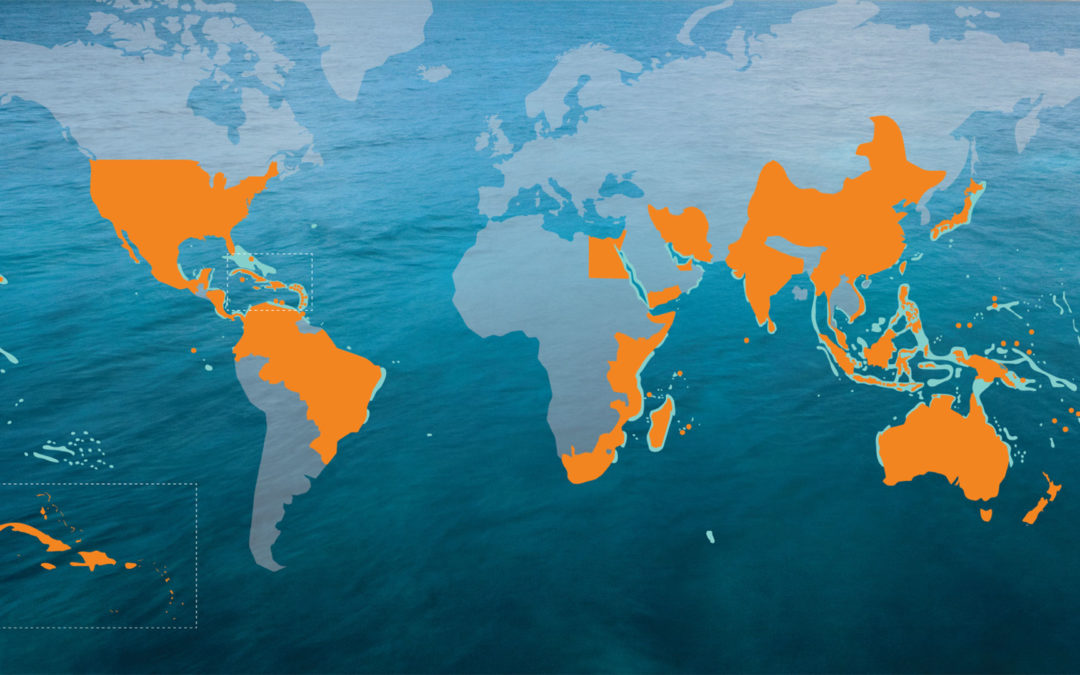
Held in conjunction with the 2026 International Coral Reef Symposium (ICRS), the weeklong training was designed to strengthen participants’ management capacity to address climate-related threats to coral reefs through instruction, mentorship, networking, and knowledge exchange. Participants represented government agencies, non-governmental organizations, research institutions, community-based conservation organizations, and protected area management programs from Belize, Colombia, Costa Rica, Dominican Republic, Honduras, Saba, Puerto Rico, Kenya, Madagascar, Malaysia, Indonesia, Philippines, Papua New Guinea, Fiji, Tokelau, Cook Islands, Guam, Hawaiʻi, and the Federated States of Micronesia.
by Michelle Graulty | Apr 27, 2026 | News, Training
The Belize cohort traveled to the Dominican Republic for an immersive five‑day program that combined hands‑on fieldwork with focused classroom sessions. Throughout the learning exchange, they strengthened their technical skills in restoration planning, deepened their understanding of climate‑resilient approaches, and built stronger collaboration across organizations.
by Michelle Graulty | Jan 30, 2026 | News, Training
In January 2026, nine NGO staff from the CoralCarib Project—spanning the Dominican Republic, Haiti, the U.S. Virgin Islands, Jamaica, and Cuba—joined a virtual presentation about the ongoing Super Reefs work in Belize.
by Michelle Graulty | Dec 15, 2025 | News
Enroll for free in English, Spanish, French, or Arabic
by Michelle Graulty | Nov 12, 2025 | News, Webinars
View the recording and resources.
by Michelle Graulty | Oct 31, 2025 | News, Training
More than 570 participants joined us for a five-week course with 25 experts on coral reef restoration
by Michelle Graulty | Oct 30, 2025 | News
Abstracts are due December 1, 2025. The Network is co-chairing this session.
by Michelle Graulty | Oct 30, 2025 | News
Abstracts are due December 1, 2025. The Network is co-chairing this session.
by Michelle Graulty | Sep 5, 2025 | News, Training
The Network trained eight early career marine managers on strategic communication planning and helped them understand how to apply it for more effective management and conservation of marine resources.
by Michelle Graulty | Aug 18, 2025 | News
The new Climate Adaptation Toolkit provides an overview of key climate adaptation concepts, as well as guidance on assessing climate threats, identifying impacts, and developing site-specific responses. The framework, featured in the toolkit, integrates climate change into all aspects of a management plan and can be adapted to any site. This allows managers to tailor their approach to local ecological, social, and governance contexts while enhancing resilience to climate change.
by Michelle Graulty | Aug 11, 2025 | News, Webinars
Recordings and resources now available.
by Michelle Graulty | Jul 8, 2025 | News, Training
Marine managers and practitioners from Cuba, the Dominican Republic, Haiti, Jamaica, and the US Virgin Islands participated in the Caribbean PAME Workshop, which focused on using PAME assessments and monitoring data to evaluate progress toward site outcomes, and more.
by Michelle Graulty | Jun 13, 2025 | News
At the 3rd United Nations Ocean Conference in Nice, France, as exciting commitments for increased ocean protections were announced, the Reef Resilience Network’s session highlighted the importance of also investing in quality management of marine protected areas by strengthening capacity of marine managers.
by Michelle Graulty | Jun 6, 2025 | News
Watch the video to see if you spot yourself!
by Michelle Graulty | Jun 5, 2025 | News, Webinars
To help address climate-related challenges, the Reef Resilience Network has developed new guidance on Climate-Smart Management Planning that integrates climate considerations into all aspects of MPA planning and decision-making.
by Michelle Graulty | May 27, 2025 | News
Discover leading strategies, expert advice, and success stories from marine managers to provide foundational knowledge on monitoring, control, surveillance, and enforcement systems. This critical information will support managers looking to improve the effectiveness of their MPA.
by Michelle Graulty | May 19, 2025 | News
With the help of global advisors from the public health, planning, and ocean management sectors, we have updated the Wastewater Pollution Online Course and Toolkit. The course is available in English, Spanish, and French.