Strengthening Reef Resilience: Skills & Strategies for Marine Managers Training – New Zealand, 2026
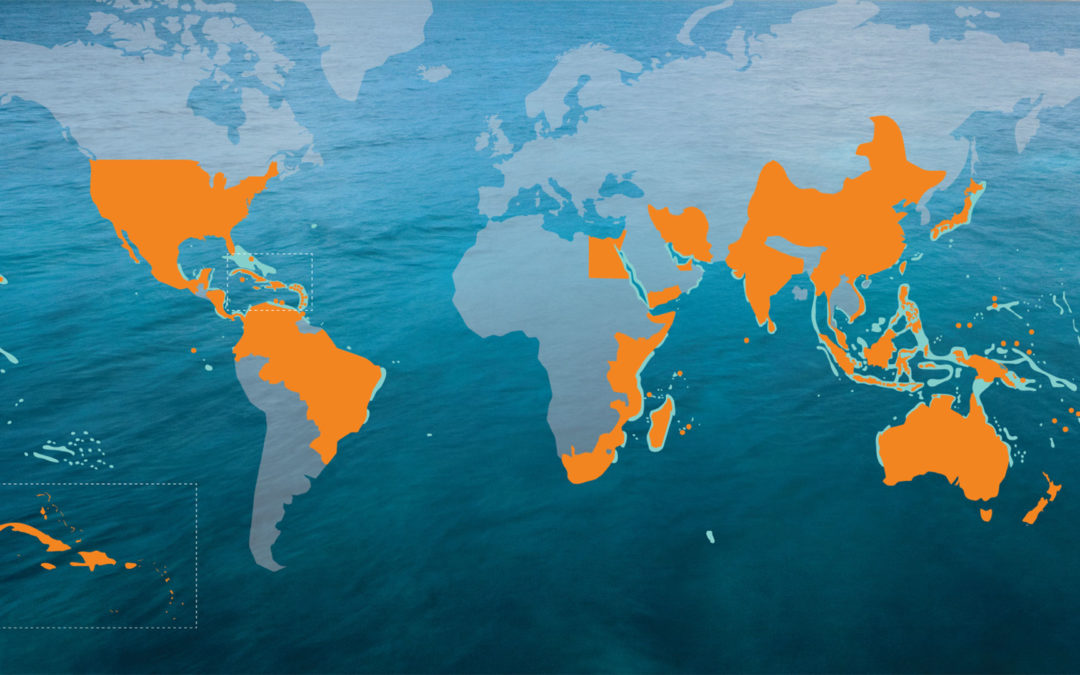
Held in conjunction with the 2026 International Coral Reef Symposium (ICRS), the weeklong training was designed to strengthen participants’ management capacity to address climate-related threats to coral reefs through instruction, mentorship, networking, and knowledge exchange. Participants represented government agencies, non-governmental organizations, research institutions, community-based conservation organizations, and protected area management programs from Belize, Colombia, Costa Rica, Dominican Republic, Honduras, Saba, Puerto Rico, Kenya, Madagascar, Malaysia, Indonesia, Philippines, Papua New Guinea, Fiji, Tokelau, Cook Islands, Guam, Hawaiʻi, and the Federated States of Micronesia.
Developing an Integrated Coral Disturbance Response Plan – Guam, 2026
RRN hosted a workshop to pilot a new Integrated Coral Disturbance Response Planning Framework
Coral Reef Management Mentored Online Course – Virtual, 2026
In May 2026, the Network hosted a mentored version of the newly updated online course
Climate-Resilient Coral Restoration Learning Exchange – Dominican Republic, 2026
The Belize cohort traveled to the Dominican Republic for an immersive five‑day program that combined hands‑on fieldwork with focused classroom sessions. Throughout the learning exchange, they strengthened their technical skills in restoration planning, deepened their understanding of climate‑resilient approaches, and built stronger collaboration across organizations.
Belize and CoralCarib Restoration Learning Exchange – Virtual, 2026
In January 2026, nine NGO staff from the CoralCarib Project—spanning the Dominican Republic, Haiti, the U.S. Virgin Islands, Jamaica, and Cuba—joined a virtual presentation about the ongoing Super Reefs work in Belize.
Management Effectiveness for MPAs Mentored Online Course – Virtual, 2025
In the fall of 2025, the Network hosted a mentored version of the new online course.
Climate-Resilient Reefs Learning Exchange – Virtual, 2025
The Network hosted personnel from TNC’s Climate-Resilient reefs projects to share experiences and lessons learned
Coral Reef Restoration Mentored Online Course – Virtual, 2025
More than 570 participants joined us for a five-week course with 25 experts on coral reef restoration
Strategic Communication for Reef Conservation Training — Hawai‘i, 2025
The Network trained eight early career marine managers on strategic communication planning and helped them understand how to apply it for more effective management and conservation of marine resources.
Caribbean Protected Area Management Effectiveness – Jamaica, 2025
Marine managers and practitioners from Cuba, the Dominican Republic, Haiti, Jamaica, and the US Virgin Islands participated in the Caribbean PAME Workshop, which focused on using PAME assessments and monitoring data to evaluate progress toward site outcomes, and more.
Latin America LSMPA Enforcement Peer Learning Exchange – Colombia, 2025
The Network piloted the new MPA Enforcement Online Toolkit with a group of 21 marine managers and enforcement officers from large-scale marine protected areas (LSMPAs) across the Latin America region at an in-person, week-long learning exchange in San Andres, Colombia. Attendees read the online toolkit as a prerequisite for the in-person workshop, learning foundational concepts for monitoring, control, surveillance, and enforcement (MCS&E) systems.
Strategic Communication for Reef Conservation Training – Hawai’i, 2025
The Network provided training to 25 marine managers, planners, and other staff from the Hawai’i Division of Aquatic Resources. The participants, representing five islands, learned about strategic communication and strategized how to engage Hawai’i residents in the new community-centered engagement process to shape and inform the management of marine resources through the Holomua Marine Initiative.
Introduction to Climate-Smart Management Planning – Bahamas, 2025
This two-day workshop focused on helping partners in The Bahamas understand climate change threats and impacts, and introducing them to the climate-smart management planning process. The workshop provided participants with an understanding of The Nature Conservancy (TNC) Reef Resilience Network’s (RRN) climate-smart planning guide, practical methods for integrating climate considerations into management strategies, and hands-on experience with climate-smart planning tools.
Climate-Smart Coral Reef Restoration Planning Workshop – Indonesia, 2025
The Network co-hosted a workshop with Yayasan Konservasi Alam Nusantara (YKAN) and key partners at Sorong in the Papua region of Indonesia to strengthen capacity for locally-led efforts to conduct climate-smart reef restoration activities.
Restoration Capacity Building for Anguilla – Mexico, 2024
During the Reef Futures 2024 Symposium, participants connected with coral restoration practitioners, researchers, and resource managers from around the world to learn how to apply the latest techniques, technologies, and science to their restoration work in Anguilla.
Climate-Smart Management Planning Moriah Harbour Cay & Lucayan National Parks – Bahamas, 2024
In October 2024, 17 marine managers, planners, and administrators from the Bahamas National Trust participated in the Climate Smart Management Planning Moriah Harbour Cay National Park and Lucayan National Park Workshop to focus on completing climate-smart updates to the park management plans. Participants identified key climate change and non-climate threats and impacts that affect priority conservation features in these parks.
Strategic Communication for Reef Conservation Training – American Samoa, 2024
Participants in American Samoa learned about the Network’s strategic communication planning process and reviewed the goals and objectives in the 2019-2024 CRAG Education & Outreach Strategic Communication Plan. They identified potentially new goals, and prioritized the unfinished education and outreach goals and objectives remaining in the plan.
Climate-Smart Management Planning Exuma Cays Land and Sea Park – Bahamas, 2024
10 marine managers, planners, and administrators from the Bahamas National Trust participated in the Climate-Smart Management Planning Exuma Cays Land and Sea Park Workshop in Nassau, Bahamas. This 3-day workshop focused on completing climate-smart updates to the Park’s management plan.
Reef Restoration Workshop – Zanzibar, 2024
In July 2024, The Nature Conservancy in Africa hosted Reef Restoration Initiatives in the Western Indian Ocean for Lesson Sharing, Capacity-building and Networking, a three-day regional workshop on Unguja Island, Zanzibar.