
Rapid Response & Emergency Restoration

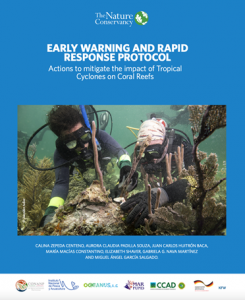
Click on the image above to access the Guide
Acute events such as storms or oil spills often demand immediate emergency actions, including colony rescue and reef repair. Addressing impacts quickly is critical for ensuring that coral reefs continue to provide essential ecological and social benefits to local communities.
The Early Warning and Rapid Response Protocol: Actions to Mitigate the Impact of Tropical Cyclones on Coral Reefs, developed by Zepeda et al. 2019, presents six steps to guide first responders and reef managers on actions to be taken before, during, and after a tropical cyclone to mitigate the impacts to coral reefs. The steps include:
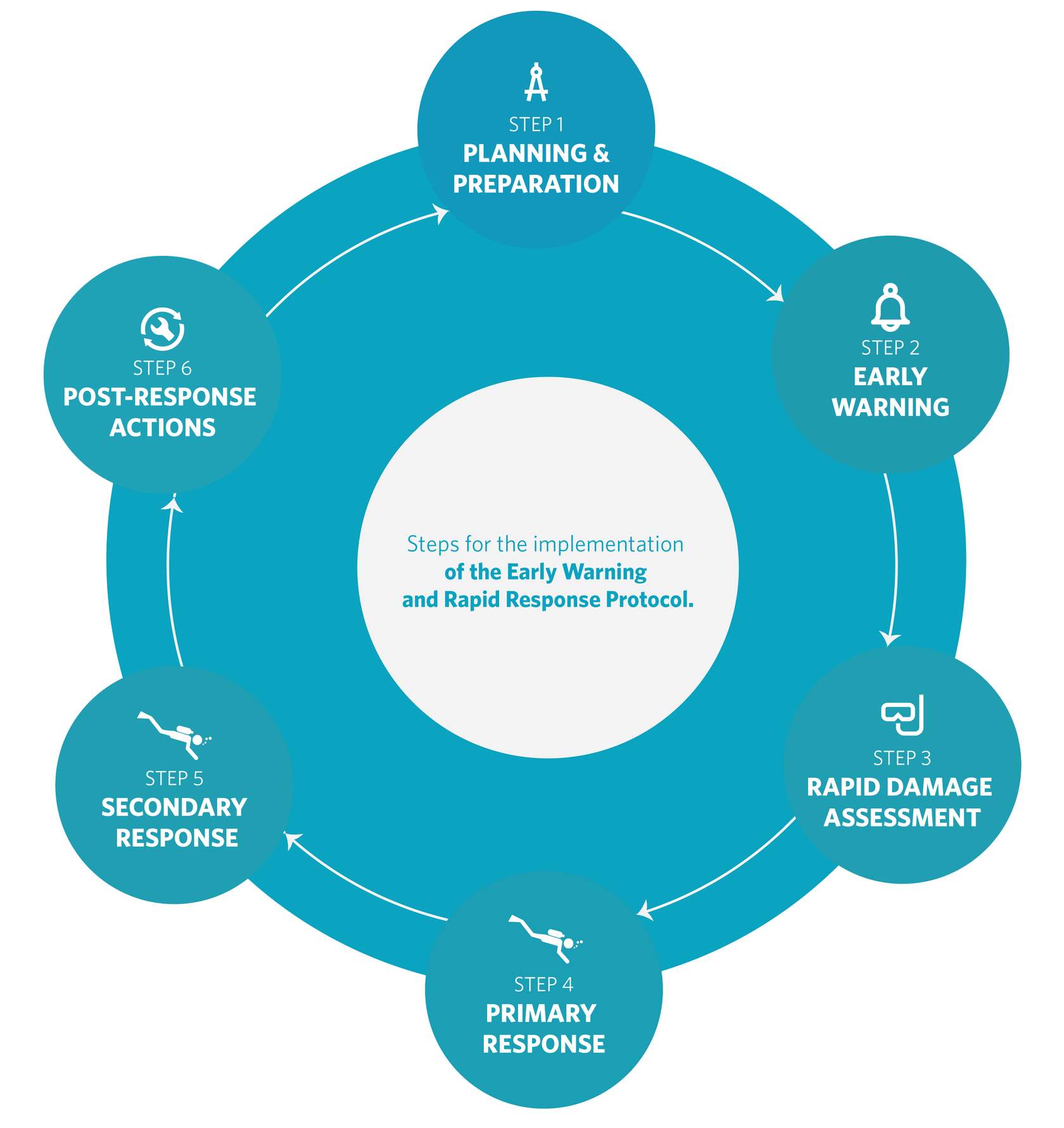
Step 1: Planning and Preparation
Describes actions to be done outside the tropical cyclone season, to prepare and plan for what is needed to implement the Protocol.
Step 2: Early Warning
Describes actions to be done during the early warning once a tropical cyclone is present in the area, both for the approaching and retreating phases.
Step 3: Rapid Damage Assessment
Describes techniques used for the rapid assessment that will be implemented to determine the level of reef damage and the amount of disaster debris dragged by the cyclone. It also proposes methods to prioritize and identify sites requiring immediate response.
Step 4: Primary Response
Describes primary response actions that need to be done immediately, as soon as the cyclone has retreated from the area. These include clean-up and reef ‘first aid’ actions. This is the core section of the Protocol.
Step 5: Secondary Response
Describes secondary response actions that need to be done after primary response efforts are completed. These include stabilization of structural fractures, nursery management, and maintenance and monitoring of sites assisted during the primary response.
Step 6: Post-Response Action
Describes actions that will be carried out once the response steps are completed. These include the development of a restoration plan and evaluating the effectiveness on the implementation of the Protocol.
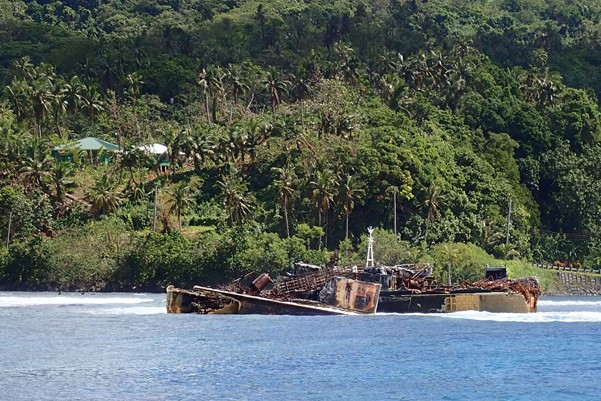
Grounded longline vessel in Leone, American Samoa. Photo © Alice Lawrence/American Samoa Department of Marine and Wildlife Resources
Other types of disturbances include ship groundings and coral disease outbreaks. The response to mechanical damage caused by groundings are similar to storms, however there are a few key differences with groundings that need to be addressed first, including the removal of vessels and chemical leakages (e.g., gasoline, oil, or antifouling paint). The response to disease outbreak varies depending on the type, severity, and extent of the outbreak. A well-established example of a coral disease response protocol is the one developed in Florida and the Caribbean for stony coral tissue loss disease (SCTLD).
See the Coral Reef Restoration Online Course Lesson 6: Rapid Response and Emergency Coral Reef Restoration for more in-depth information on how to prepare for, respond to, and repair coral reef ecosystems after events that cause acute physical damage on reefs.