
Physical Reef Restoration

In addition to maintaining healthy coral populations and reef cover, restoring the reef substrate can be crucial when natural reef structures are damaged, degraded, or unsuitable for coral larvae to settle. For instance, in areas where dynamite fishing has destroyed the reef framework, adding or stabilizing substrate may be necessary before outplanting can succeed. Similarly, reefs overgrown by macroalgae may require substrate enhancement to create conditions suitable for coral attachment and natural recruitment.
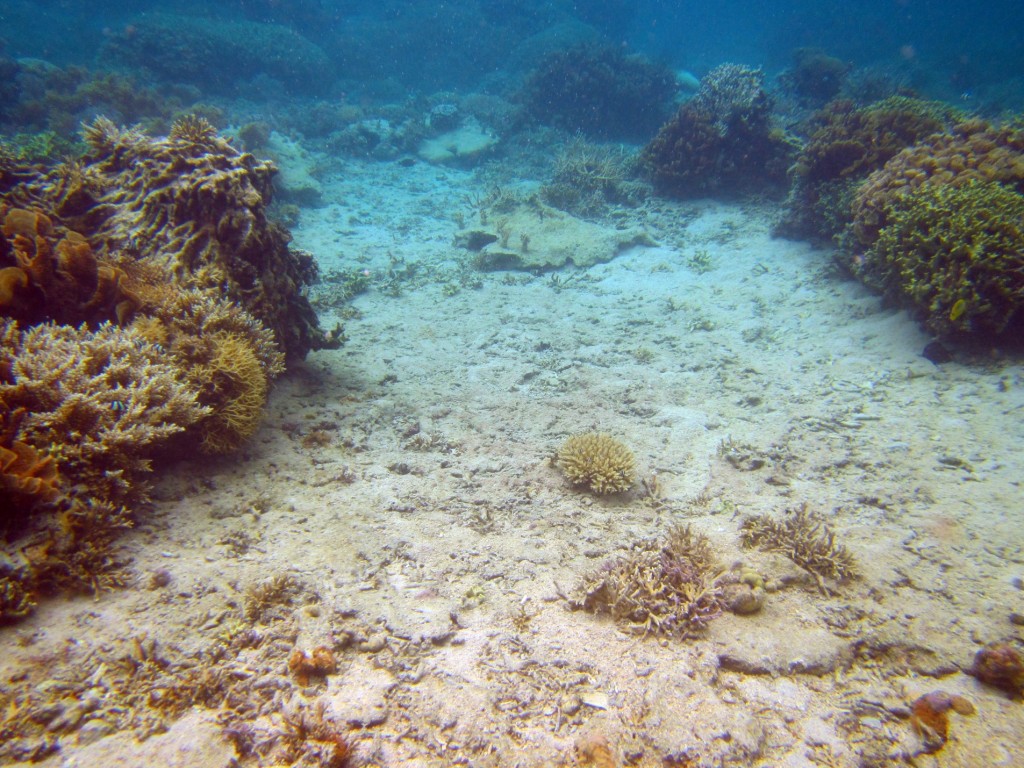
A reef area that is suitable for coral restoration activities. Photo © Reef Explorer (Fiji) Ltd.
Rubble Stabilization
Human and climate-driven threats (e.g., dynamite fishing, trampling, tropical storms) are accelerating coral reef degradation, converting healthy reefs to large rubble fields at a pace that exceeds the natural recovery capacity of coral reef ecosystems.
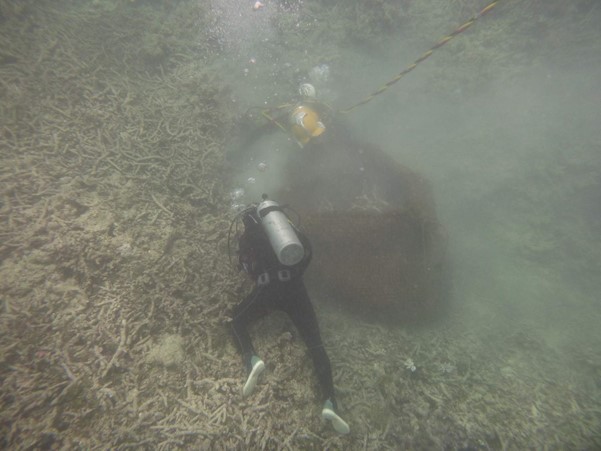
Reef bags are used to collect rubble on a degraded reef in Australia. Photo © Tom Baldock
There are four broad categories of methods for rubble stabilization: ref
- Direct manipulation of substrate (e.g., rubble removal)
- Addition of structures to restrict rubble movement (e.g., mesh)
- Addition of structures to provide alternative substrate (e.g., MARRS Reef Stars)
- Propagation of corals and sponges
Substrate Addition
Substrate addition for coral reef restoration once relied on engineered structures made from materials like cement, steel, and tires to repair reefs damaged by ship groundings, mining, or dynamite fishing, but these rarely attracted reef-building corals. Modern projects now use more natural materials to restore ecological health and enhance ecosystem services such as coastal protection.
Three critical design elements for substrate addition projects are the choice of material, preferably natural materials, the structural design that replicates the reef’s complex micro- and macro-rugosity, and the placement on the reef to align with the specific restoration goals.
See the Coral Reef Restoration Online Course Lesson 5: Restoring Physical Reef Structure for more information on substrate stabilization and substrate addition techniques to support reef recovery and improve coastal protection.