
Rapid Response & Emergency Restoration


Click on the image above to access the guide.
Acute events such as storms or oil spills often demand immediate emergency actions, including colony rescue and reef repair. Addressing impacts quickly is critical for ensuring that coral reefs continue to provide essential ecological and social benefits to local communities.
The Response Protocol for the Rescue of Coral Reefs Affected by Hurricanes developed by Padilla-Souza et al. 2025 provides tools and guidance for reef response brigades to develop timely, effective, and coordinated action when facing reef damage caused by hurricanes and storms. While the guide was developed specifically for the Mesoamerican Reef, it can be replicated in other reef regions that have existing capacity for emergency response. This updates the Early Warning and Rapid Response Protocol: Actions to Mitigate the Impact of Tropical Cyclones on Coral Reefs.
The protocol is organized into two distinct phases: Response coordination and response execution.
Response Coordination
Coordinating a comprehensive response to a hurricane involves careful planning and organization, and in-depth preparation, as outlined below.

Responsibilities included in response coordination. Source: Padilla-Souza et al. 2025
Response Execution
The response for rescuing corals from hurricanes is divided into three stages that span from a few days before the predicted impact of the storm to a few months following impact:

The three stages of response. Source: Padilla-Souza et al. 2025
The protocol describes actions within each of the phases, along with practical tools such as storm tracking tools, decision-making diagrams to guide the type of response, and response plan outlines, budget considerations, and a list of potential tools.
Other Types of Emergency Responses
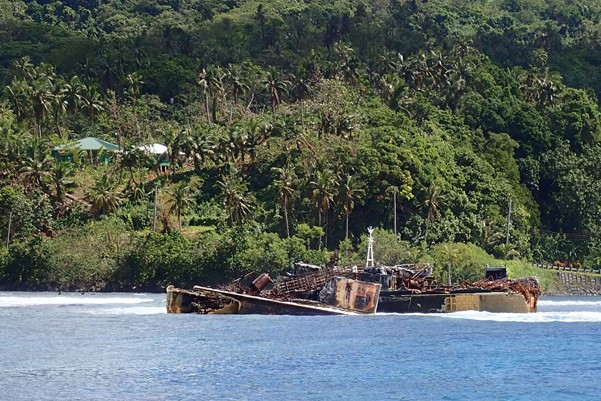
Grounded longline vessel in Leone, American Samoa. Photo © Alice Lawrence/American Samoa Department of Marine and Wildlife Resources
Other types of disturbances include ship groundings and coral disease outbreaks. The response to mechanical damage caused by groundings are similar to storms, however there are a few key differences with groundings that need to be addressed first, including the removal of vessels and chemical leakages (e.g., gasoline, oil, or antifouling paint). The response to disease outbreak varies depending on the type, severity, and extent of the outbreak. A well-established example of a coral disease response protocol is the one developed in Florida and the Caribbean for stony coral tissue loss disease (SCTLD).
See the Coral Reef Restoration Online Course Lesson 6: Rapid Response and Emergency Coral Reef Restoration for more in-depth information on how to prepare for, respond to, and repair coral reef ecosystems after events that cause acute physical damage on reefs.
Resources
Response Protocol for the Rescue of Coral Reefs Affected by Hurricanes
Protocolo de Respuesta Para el Rescate de Arrecifes Afectados por Huracanes
NOAA Damage Assessment, Remediation, and Restoration Program
Case Study: How We Pushed 400 Tons of Coral into the Ocean after a Cyclone in Australia
Case Study: Assessment of 2017 Hurricane Impacts to Coral Reefs in Puerto Rico