
Data Analysis, Sharing, and Communication

Collecting monitoring data is only half the job: the real value comes from data analysis and using it to guide decisions and communicate with stakeholders on the impact of management strategies. Without that step, monitoring becomes a box‑ticking exercise rather than a management tool.
Effective data analysis helps managers:
- Understand whether management actions are working and what needs adjustment
- Detect emerging problems early before they escalate
- Turn raw data into clear, actionable insights
- Support decisions with credible evidence for communities and funders
- Strengthen adaptive management by learning from trends over time
Standardized Data Platforms
The more a monitoring plan is standardized, the easier it is to report across different scales. For example, the regional monitoring programs AGRRA and the Healthy Reefs for Healthy People Initiative both use a reef health index to compile benthic data, which is then reported in their Coral Reef Report Cards.
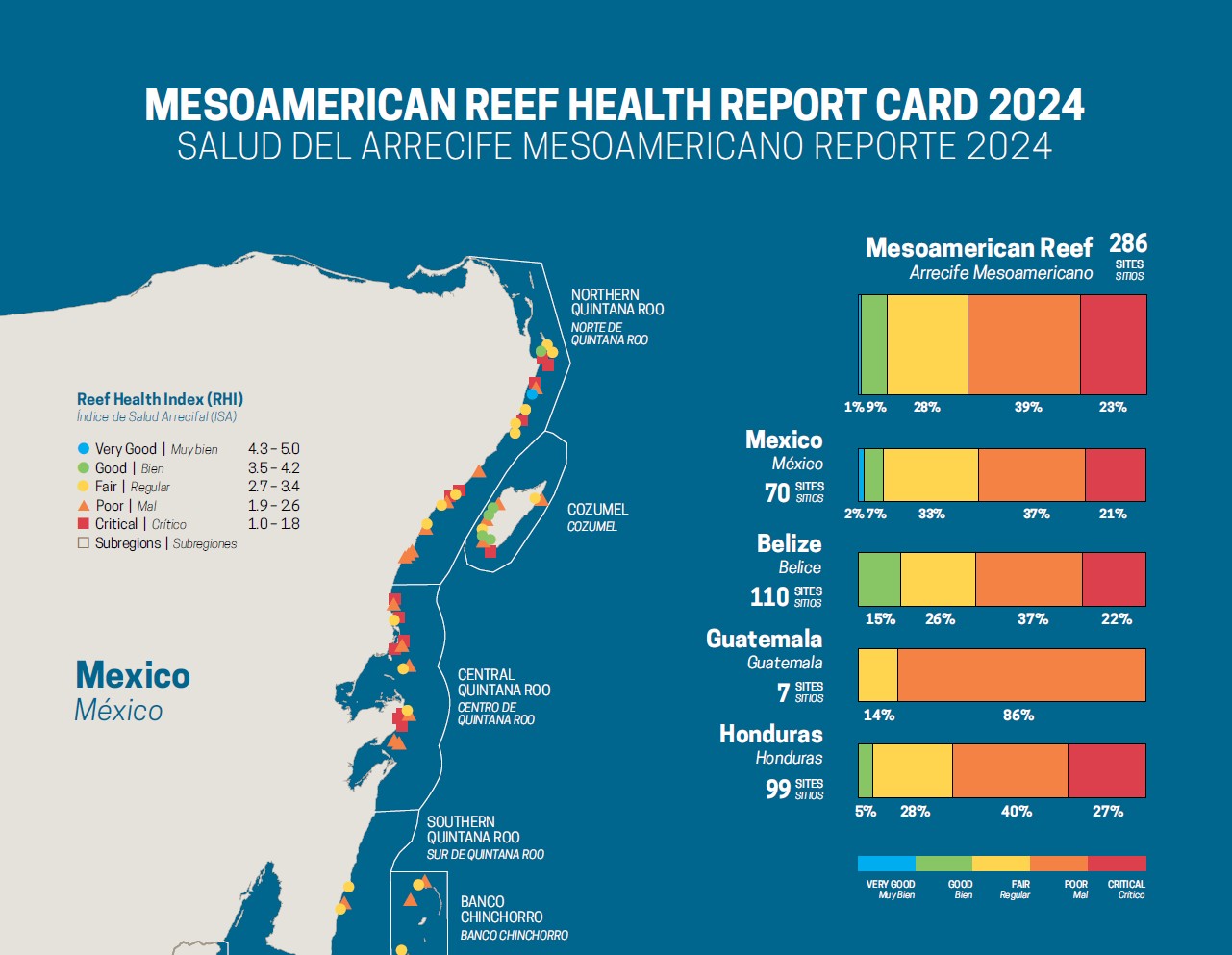
Example of a report card from Healthy Reefs for Healthy People for the Mesoamerican Reef in 2024. Source: McField et al. 2024
Effective Communication
The effective communication of monitoring data translates scientific evidence into information that stakeholders can understand, trust, and act on. When shared in clear and accessible ways, monitoring data builds trust, helps people see what is working (and what is not), and encourages stakeholders to stay engaged and supportive of conservation efforts.
Every five years, the Global Coral Reef Monitoring Network (GCRMN) extends an invitation for monitoring programs to share their monitoring results. By following agreed standards, these data can be compiled to produce worldwide assessments of coral reef condition and coral health. The GCRMN also includes community-based socioeconomic monitoring that is facilitated by local and regional partners using the SocMon protocol.
Information on data integration and how to contribute to the GCRMN can be found here.